 Save
Save There's something about waking up to the smell of sausage sizzling in a cast-iron skillet that feels like home, even if you're not sure why. I learned to make biscuits and gravy the hard way—burnt bottoms, dense middles, gravy that broke into sad little clumps—but somewhere between the failures and the flour dust settling on my kitchen counter, it clicked. Now when I make this dish, I'm not just cooking breakfast; I'm recreating that moment when someone put a plate in front of me and everything felt right.
I made this for my roommate on a snowy morning when neither of us wanted to leave the apartment, and watching her face when she took that first bite—eyes closing, a little smile—that's when I realized this wasn't just food. It was the edible version of being taken care of.
Ingredients
- All-purpose flour (2 cups for biscuits, 1/4 cup for gravy): The foundation of everything here; the flour you use matters because fresher flour absorbs moisture differently, so if your biscuits feel stiff, your flour might be older than you think.
- Cold unsalted butter (1/2 cup cubed): This is non-negotiable—the cold butter creates those flaky layers, so chill it in the freezer for 10 minutes before cutting it in if your kitchen is warm.
- Cold buttermilk (3/4 cup): It sounds fancy but it's just tangy, and that tang makes the biscuits tender; regular milk won't give you the same tender crumb.
- Baking powder and baking soda (1 tablespoon and 1/2 teaspoon): They're both leavening agents but they do different things, so don't skip the baking soda thinking baking powder is enough.
- Breakfast sausage (1 pound, crumbled): Pick your spice level and brown it properly—this is where the gravy gets its soul, so don't rush it.
- Whole milk (3 cups): Whole milk makes the gravy rich and silky, and if you use skim, it tastes thin and forgettable.
- Freshly ground black pepper: Freshly ground tastes peppery and alive; pre-ground tastes dusty and flat, and this dish deserves better.
- Salt and cayenne (1/4 teaspoon salt, optional cayenne): Salt brings everything into focus, and cayenne adds a whisper of heat that sneaks up on you.
Tired of Takeout? 🥡
Get 10 meals you can make faster than delivery arrives. Seriously.
One email. No spam. Unsubscribe anytime.
Instructions
- Preheat and prep:
- Get your oven to 450°F and line a baking sheet with parchment paper so the biscuit bottoms don't stick and brown unevenly.
- Mix the dry ingredients:
- Whisk flour, baking powder, baking soda, salt, and sugar together in a large bowl, making sure there are no lumps of baking soda hiding in the corners.
- Cut in the cold butter:
- Using a pastry cutter, two forks, or your fingertips (my preferred method), work the cold butter into the flour mixture until it looks like coarse breadcrumbs with some pea-sized pieces of butter still visible. This texture is what creates those beautiful flaky layers.
- Add the buttermilk:
- Pour in the buttermilk and stir gently with a fork just until the dough comes together—stop as soon as you don't see dry flour, because overworking the dough makes tough biscuits.
- Fold and shape:
- Turn the dough out onto a lightly floured surface and gently pat it to about 1-inch thickness, then fold it over on itself 2-3 times and pat again to 1-inch. This folding creates those tender, layered biscuits you're after.
- Cut and arrange:
- Use a 2.5-inch biscuit cutter to cut out biscuits, pressing straight down without twisting (twisting seals the edges and prevents rising), and place them close together on the baking sheet so they support each other as they bake.
- Bake the biscuits:
- Bake 12-15 minutes until the tops are golden brown and a toothpick inserted in the center comes out clean, then remove and let them cool just long enough to handle.
- Cook the sausage:
- While the biscuits bake, crumble the breakfast sausage into a large skillet over medium heat and cook, breaking it up with a spoon as it cooks, until it's browned all over and cooked through—this takes about 8-10 minutes.
- Make the roux:
- Sprinkle the flour over the cooked sausage and stir constantly for 1-2 minutes so the flour absorbs all those flavorful drippings and toasts slightly.
- Add the milk slowly:
- Pour in the milk gradually while stirring constantly to keep lumps from forming—if you dump it all in at once, you'll spend the next 10 minutes whisking out little flour balls.
- Simmer and season:
- Bring the gravy to a gentle simmer, then add the black pepper, salt, and cayenne if using. Let it bubble gently for 5-7 minutes, stirring occasionally, until it thickens enough to coat the back of a spoon.
- Taste and adjust:
- Taste the gravy and adjust the seasonings—more pepper if you want heat, more salt if it tastes bland, a pinch more cayenne if you're feeling bold.
- Assemble and serve:
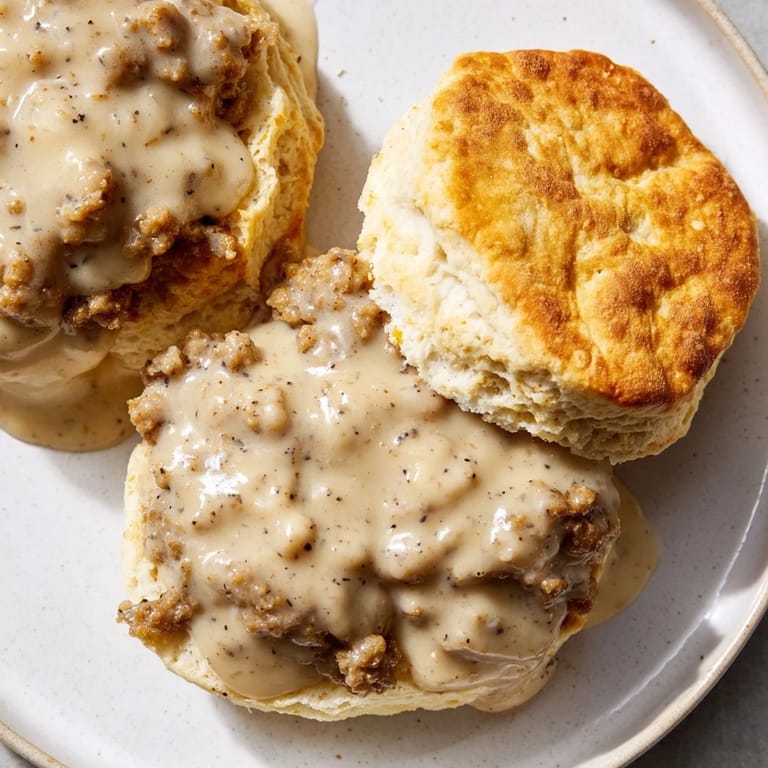
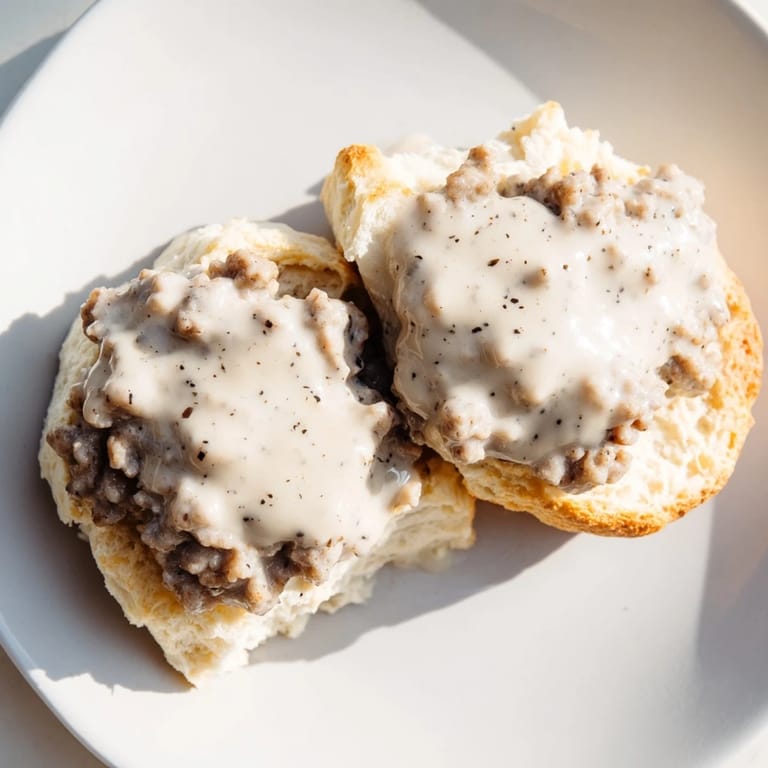
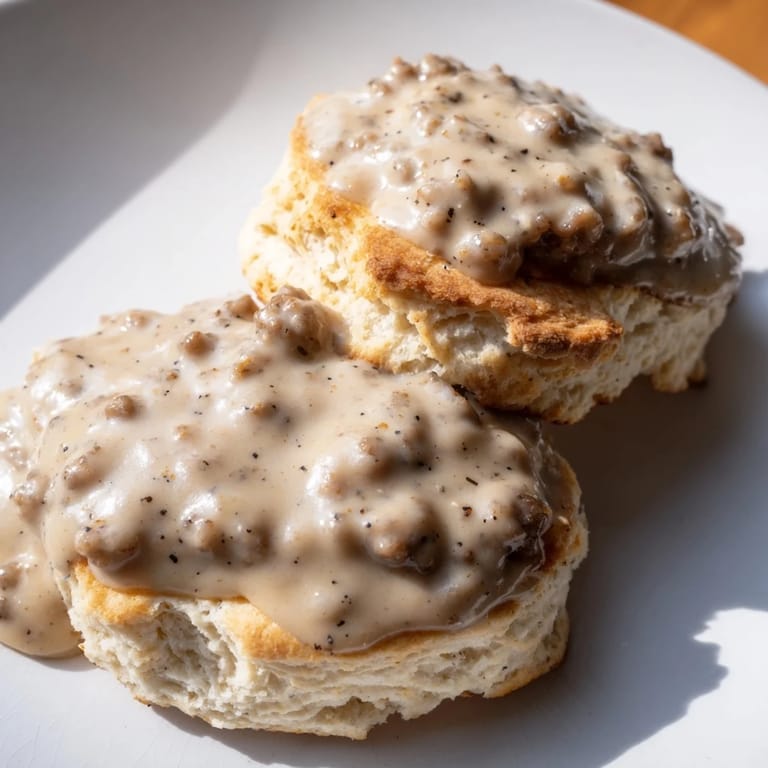
- Split the warm biscuits and spoon the hot sausage gravy generously over the top, then serve immediately while everything is still steaming.
 Save
Save My grandmother never wrote down her biscuit recipe because she didn't believe in recipes for things that lived in your hands and your instincts. Making this dish has taught me what she meant—after the third or fourth time, you stop measuring and start feeling, and that's when the magic happens.
The Science of Flaky Biscuits
Flaky biscuits are all about the butter—those little pockets of cold butter steam and create layers as the biscuit bakes, which is why cold butter matters more than any other ingredient. When you cut cold butter into flour, you're essentially creating thousands of tiny butter-flour sandwiches, and when heat hits them, the steam pushes them apart. If your butter is soft or melted, you end up with a biscuit that's more cake-like than flaky. I learned this the hard way one summer when I made biscuits in a hot kitchen and they came out dense and crumbly instead of light and layered.
Making the Gravy Silky
The secret to smooth, lump-free gravy is the roux—that mixture of fat and flour cooked together before you add the milk. When you cook the flour with the sausage drippings, you're toasting the flour and getting rid of that raw, chalky taste, and the heat helps the flour absorb the fat so it mixes smoothly with the milk instead of clumping. The other trick is adding the milk slowly and stirring constantly; if you rush this step, the flour particles can't hydrate properly and you end up with lumpy gravy. I once dumped three cups of milk into a roux all at once because I was impatient, and I spent twenty minutes straining it through cheesecloth trying to save the dish.
Serving and Storage
Biscuits and gravy are best eaten immediately, while everything is hot and steaming, but life doesn't always work that way. You can make the biscuits ahead and reheat them wrapped in foil, and you can make the gravy a few hours in advance and warm it gently in a skillet, adding a splash of milk if it thickens too much. Leftover biscuits can be split and turned into breakfast sandwiches with eggs and cheese, and leftover gravy is strangely good over hash browns or roasted potatoes.
- Store biscuits in an airtight container at room temperature for up to two days, or freeze them and reheat wrapped in foil.
- Refrigerate gravy in a covered container for up to three days and reheat gently over medium heat, stirring in milk if it's too thick.
- This is a dish best made fresh, so plan to have it when you can give it attention and enjoy it hot.
 Save
Save There's something deeply satisfying about feeding people food that makes them slow down and pay attention, and biscuits and gravy have that power. Make this for someone you care about and watch what happens.
Recipe FAQs
- → How do you achieve flaky biscuits?
Incorporate cold butter into the flour mixture without overmixing, and gently fold the dough to create layers that bake into a flaky texture.
- → What type of sausage works best for the gravy?
Use mild or spicy breakfast pork sausage, crumbled and browned to add rich flavor and texture to the gravy.
- → How is the sausage gravy thickened?
Sprinkling flour over cooked sausage and cooking briefly before gradually stirring in milk helps thicken the gravy to a smooth consistency.
- → Can I add extra spices to the gravy?
Yes, adding black pepper and optional cayenne pepper boosts the warmth, and herbs like sage or thyme can enhance the flavor profile.
- → What is the best way to serve this dish?
Split warm biscuits and generously ladle the hot sausage gravy on top. Pair with eggs or fresh fruit for a complete breakfast.