 Save
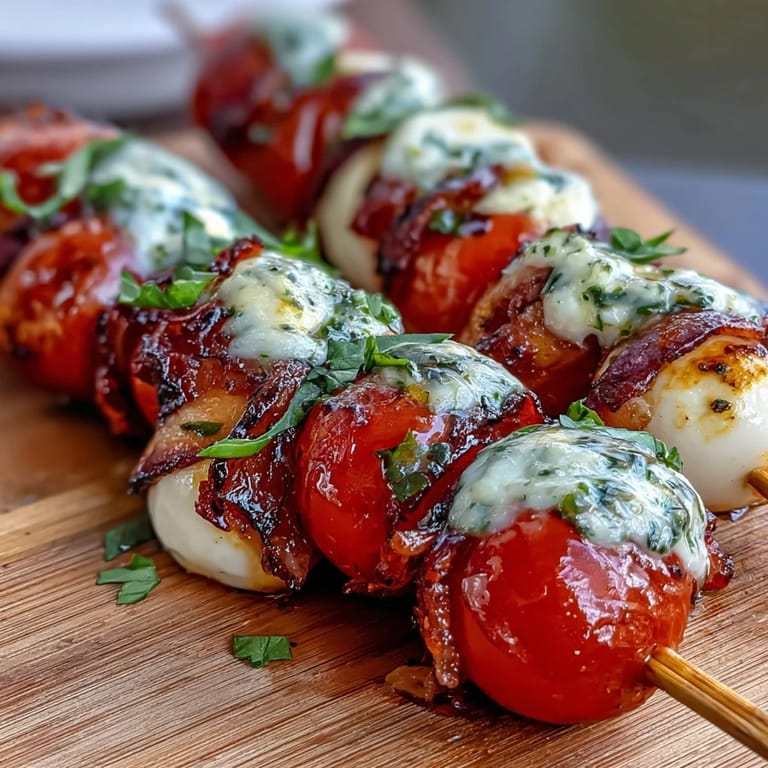
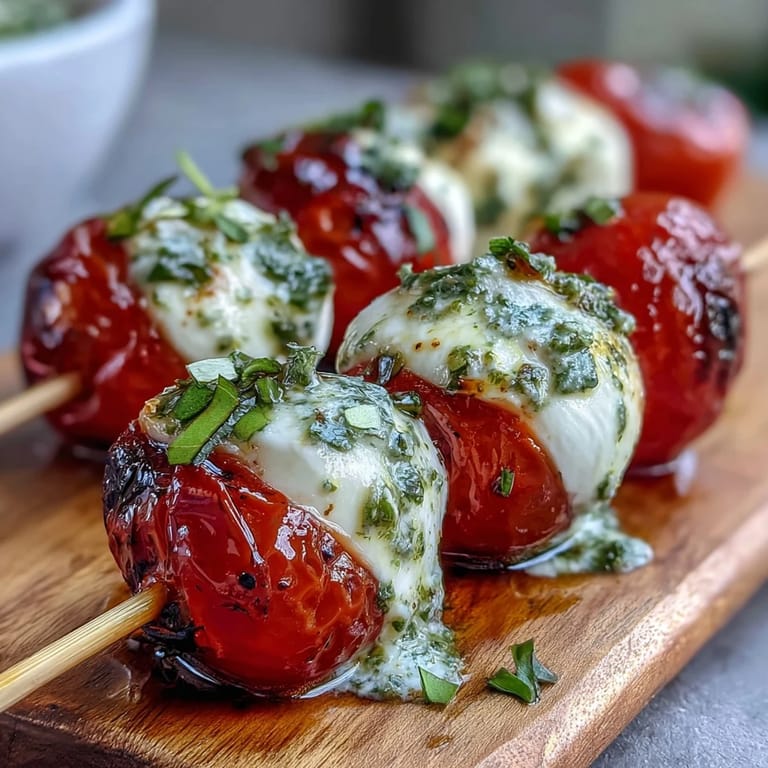
Save My neighbor handed me a plate of these at a Fourth of July cookout, and I watched her make them look so effortless—threading cherry tomatoes and mozzarella onto tiny skewers like she was assembling edible jewelry. The basil leaf caught between the two, that moment of green against white against red, stopped me. She drizzled bright green pesto over them and suddenly, summer itself was on a stick. I asked for the recipe right there, because sometimes the simplest things leave the deepest impression.
I made a batch for my sister's book club last spring, and one of her friends mentioned offhandedly that she thought anything on a skewer automatically tasted better. Everyone laughed, but then everyone finished their plate, so maybe she was onto something. The wooden skewers gave off that slight charred-wood smell, and the pesto caught the light when people held them up. It was the kind of appetizer that disappears without anyone planning to eat that much.
Ingredients
- Cherry tomatoes: Pick ones that feel firm but give slightly to pressure—they should taste like summer, not like watery disappointment, so a farmers market visit is worth it.
- Mini mozzarella balls (bocconcini): These are the secret to making this feel special instead of ordinary because they're creamy in exactly three bites instead of one block.
- Fresh basil leaves: Buy the bunch at the market the morning you're making these if you can, because basil wilts faster than you'd think and the flavor changes.
- Wooden or bamboo skewers: Soak them in water for thirty minutes before assembling so they don't char on the edges and become brittle to hold.
- Fresh basil leaves (for pesto), packed: This is a different measure than it sounds—packed means you're really squeezing them down into the measuring cup because air takes up space that should be basil.
- Pine nuts: Toast them lightly in a dry pan first if you have two minutes, because it deepens the flavor so much you'll wonder why anyone skips this step.
- Garlic clove: Use just one small one unless you want the pesto to taste like a vampire repellent instead of an elegant sauce.
- Grated Parmesan cheese: The pre-grated kind works fine, but freshly grated melts into the pesto differently and tastes sharper in a good way.
- Extra virgin olive oil: This is where quality actually matters because it's raw and prominent, so don't use the bottle hiding in the back of the cabinet.
- Salt and freshly ground black pepper: Taste as you go because the cheese and nuts already bring salt, so you might need less than you think.
Tired of Takeout? 🥡
Get 10 meals you can make faster than delivery arrives. Seriously.
One email. No spam. Unsubscribe anytime.
Instructions
- Soak those wooden skewers:
- Drop them in a bowl of water while you prep everything else so they won't turn crispy and sad. Thirty minutes is enough, and it's a good moment to get your board and ingredients organized.
- Build your skewers with intention:
- Thread one cherry tomato, then one mozzarella ball, then tuck that basil leaf in between like it's the punctuation mark holding everything together. The order matters less than making sure they look balanced and appetizing on the platter.
- Make the pesto by pulsing, not blending:
- Dump your basil, pine nuts, garlic, and Parmesan into the food processor and pulse until everything is finely chopped but not completely smooth like baby food. You want texture that feels intentional, not a green paste.
- Drizzle the oil slowly while the machine runs:
- This is how you emulsify it slightly and make it silky instead of separated and greasy. Watch it transform and you'll understand why this step matters.
- Season and taste immediately:
- Salt and pepper go in last because you need to taste it before adding more, since cheese already contributes saltiness. Adjust while you're standing there with a spoon instead of guessing.
- Finish the skewers at the last possible moment:
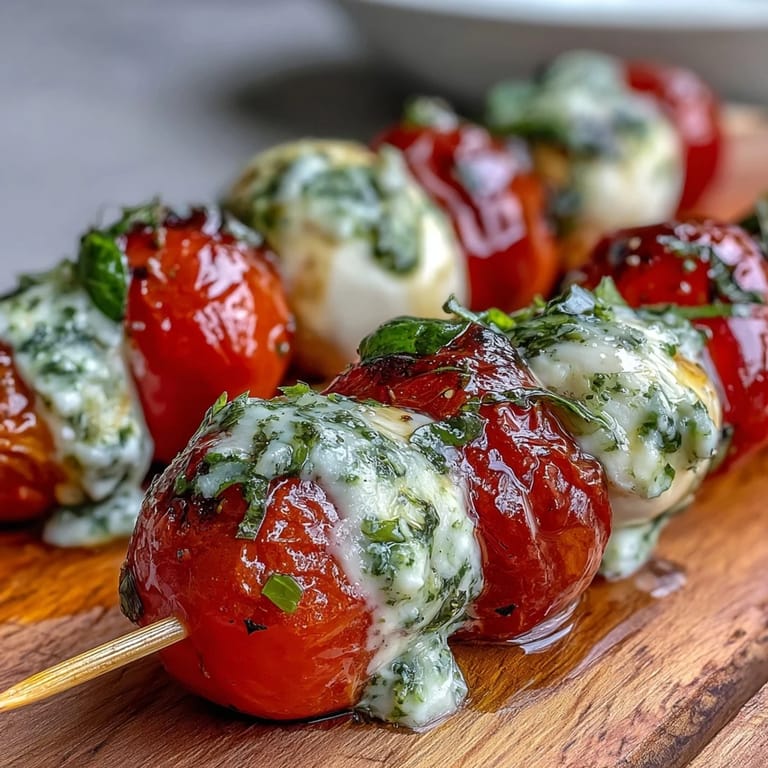
- Drizzle the pesto over the assembled skewers right before serving so the basil leaf stays green and the mozzarella doesn't weep. If you're making them ahead, hold the pesto in a small jar and drizzle just before guests eat.
 Save
Save My eight-year-old nephew called these "fancy fruit on sticks" and then ate five before anyone else got to the platter. That's when I knew they'd crossed from appetizer into something kids and adults both genuinely wanted, which doesn't happen as often as you'd think.
Variations That Still Work
Once you understand this formula, you can shift it around based on what's available or what you're feeling. I've made these with larger tomatoes cut into quarters, cucumber rounds instead of mozzarella when I was out, and even yellow tomatoes for a softer look that somehow tasted more delicate. The basil leaf is really the anchor that makes it a Caprese moment instead of just a skewer, so keep that constant and let everything else move around.
Why This Works for Crowds
These are the kind of appetizer that people can grab while standing, talking, and catching up without needing a plate or two hands. They're substantial enough that they feel like food, not just a tiny nibble, but light enough that people keep reaching back for another. The pesto makes them feel restaurant-quality even though you genuinely made them in your kitchen in borrowed time.
Storing and Make-Ahead Strategy
The skewers themselves hold up beautifully for four hours in the refrigerator before you dress them, which means you can thread tomatoes and mozzarella that morning and finish them minutes before people arrive. The pesto keeps in an airtight container for a couple of days, though the color fades and the flavor softens, so fresh is genuinely better here. Think of the assembly as a five-minute final touch rather than a full project, and you'll feel so much calmer about serving them.
- Make the pesto first and let it sit while you prep the skewers so the flavors get to know each other.
- Pat the tomatoes dry before threading them so they don't slip around on the skewer and look precarious.
- If you're nervous about the basil leaf staying in place, trim the stem short so it's less likely to catch and pull when guests pick up the skewer.
 Save
Save These skewers are proof that sometimes the most impressive dishes are the ones that let their ingredients shine instead of hiding them under sauce or complexity. Make them when summer tomatoes are at their peak and share them with people who appreciate when food tastes like itself.
Recipe FAQs
- → How do I make the pesto for the skewers?
Combine fresh basil, pine nuts, garlic, and Parmesan in a food processor, then slowly add olive oil until smooth. Season with salt and pepper.
- → Can I prepare these skewers in advance?
Yes, assemble the skewers up to 4 hours ahead and refrigerate. Add the pesto drizzle just before serving to keep them fresh.
- → Are there nut-free alternatives for the pesto?
Yes, substitute pine nuts with sunflower seeds for a nut-free pesto variation without compromising flavor.
- → What is the best way to serve these skewers?
Arrange the skewers on a serving platter and drizzle with fresh pesto just before serving. Optionally, add a splash of aged balsamic vinegar for extra depth.
- → What tools are needed to prepare the pesto?
A food processor or blender is ideal for finely chopping ingredients and achieving a smooth pesto texture.