 Save
Save The first time I made churros at home, I was chasing that moment—you know the one—when you're walking through a Spanish market at dawn and the churro stand is just firing up, the oil crackling with possibility. My kitchen was chaos that morning: flour dusting my apron, my partner laughing at my intensity as I hunted for the piping bag. But when those first golden strips hit the hot oil and puffed up like edible clouds, something clicked. They tasted like every café con chocolate memory I'd been hoarding.
I'll never forget the weekend my sister came to visit during the rainy season, and we were all stuck inside feeling restless. I decided on a whim to make churros, and somehow that simple act of frying together became the thing that turned the whole day around—we stood at the stove making a mess of things, dipping warm churros into dark chocolate, telling stories that made us laugh until our sides hurt. Food doesn't always fix things, but that afternoon, it absolutely did.
Ingredients
- Water and butter: These create the base of a choux dough, the same technique that makes éclairs and profiteroles—the heat helps the flour hydrate perfectly so your churros stay tender inside.
- All-purpose flour: Measure by weight if you can; it makes a real difference in texture and prevents the dense, heavy results that come from packing flour into the measuring cup.
- Egg and vanilla: The egg binds everything together and gives that golden color, while vanilla adds a subtle sweetness that plays beautifully against the cinnamon sugar and chocolate.
- Vegetable oil: You need enough oil and the right temperature (350°F is your sweet spot) to avoid greasy, soggy churros that feel heavy in your mouth.
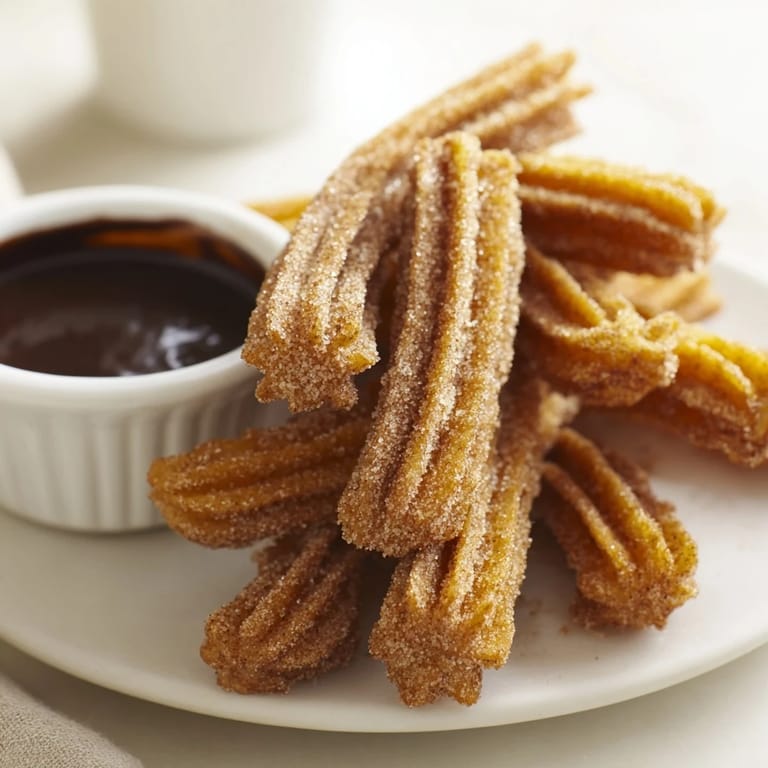
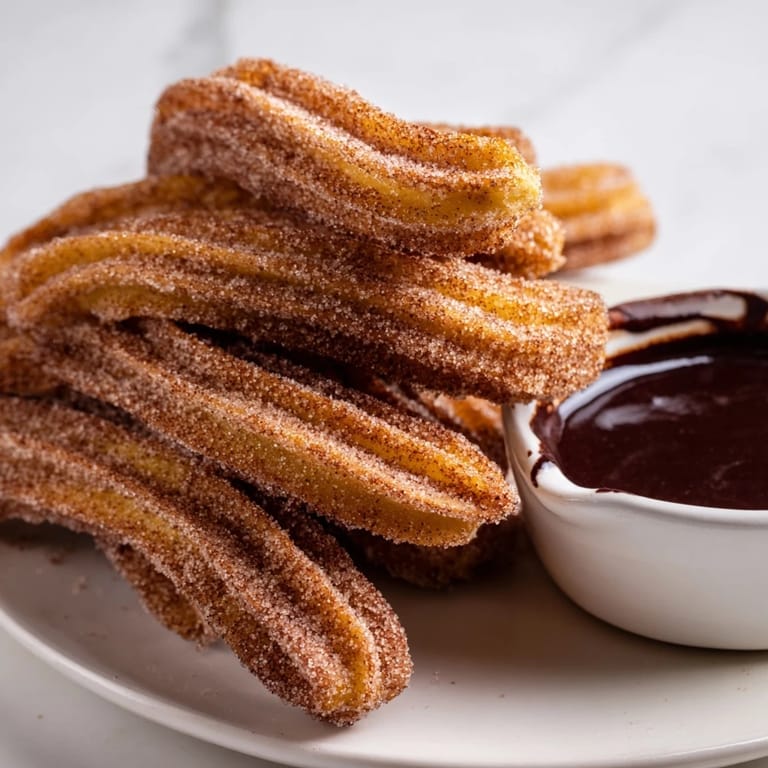
- Cinnamon sugar coating: Don't skimp here—this is where the magic lives, the first taste that makes people close their eyes.
- Dark chocolate: Choose something you'd actually eat on its own; the quality of the chocolate sauce matters as much as the churros do.
Tired of Takeout? 🥡
Get 10 meals you can make faster than delivery arrives. Seriously.
One email. No spam. Unsubscribe anytime.
Instructions
- Build your dough base:
- Combine water, butter, sugar, and salt in a medium saucepan and bring it to a gentle boil—you want steam rising but not violent bubbling. Once it's hot, add all the flour at once and stir hard with a wooden spoon; the mixture will look shaggy at first, then suddenly come together into a smooth ball that pulls away from the sides.
- Cool and enrich:
- Let the dough rest for 5 minutes off heat so it cools enough to handle the egg without cooking it. Add the egg and vanilla, then beat vigorously until the dough becomes glossy and smooth—this takes some elbow grease, but you'll feel it transform under your spoon.
- Transfer to the piping bag:
- While the dough is still warm, transfer it to a piping bag fitted with a large star tip; warm dough pipes more easily than cool dough, which becomes stiff and hard to work with.
- Heat your oil properly:
- Use a thermometer and bring your oil to exactly 350°F (175°C) in a deep pan—too cool and the churros absorb oil like sponges, too hot and they brown before cooking through inside.
- Fry in batches with confidence:
- Pipe 4–6-inch strips directly into the hot oil using scissors to cut cleanly, working in small batches so the temperature stays steady. Fry for 2–3 minutes per side until they're golden brown and feel crispy when you tap them with your spoon.
- Drain and coat:
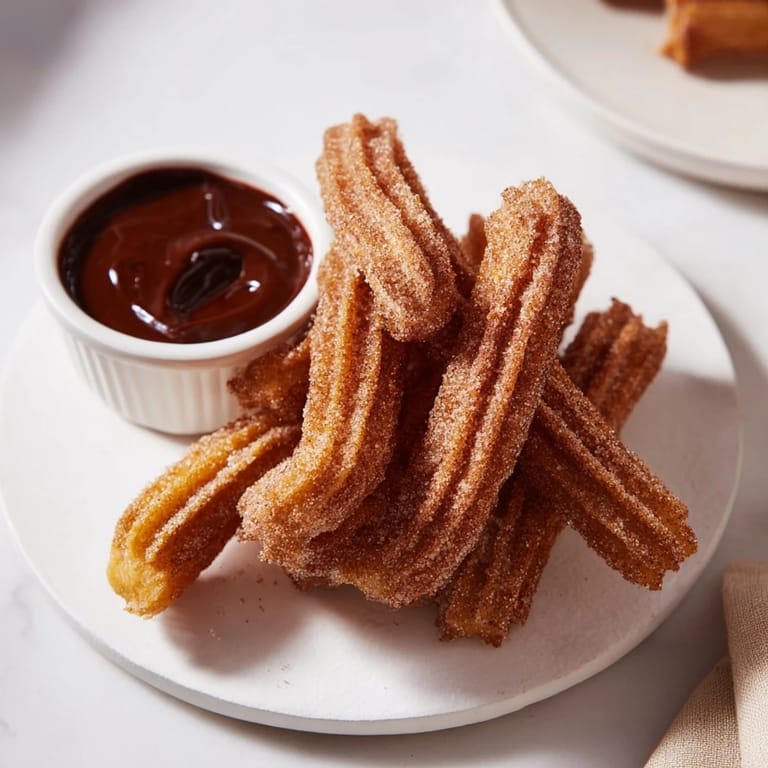
- Lift them out with a slotted spoon and drain on paper towels for just a minute, then immediately roll them in the cinnamon sugar while they're still warm—the heat helps the sugar adhere and creates that irresistible crunchy-sweet shell.
- Make your chocolate sauce:
- Heat cream and sugar until just simmering, then pour it over chopped chocolate and butter. Let it sit undisturbed for a minute to let the heat do the work, then stir gently until you have something silky and pourable.
- Serve with ceremony:
- Arrange warm churros on a plate alongside the chocolate sauce and serve immediately; this is not a dish that waits well, and the experience of warm churro meeting warm chocolate is the whole point.
 Save
Save There's something almost ceremonial about churros, isn't there? They're not fancy, but they feel special because they demand presence—you can't multitask while you're frying them, and you definitely can't let them sit around getting cold and stale. They're an edible reminder that some of the best things in life are the ones that ask you to slow down and pay attention.
The Art of Getting the Oil Temperature Right
I learned this the hard way after my third failed batch: oil temperature is not a suggestion, it's the law. Too cool (under 340°F) and your churros become pale, oil-logged sponges that taste like sadness. Too hot (over 365°F) and the outside browns while the inside stays raw dough. A good instant-read thermometer is genuinely the best money you'll spend on this recipe, because guessing by dropping a bit of dough in is how you end up with disappointing results. I keep mine right next to the stove now, and I check the temperature before each batch because oil cools faster than you'd think.
Piping Without Frustration
The piping bag can feel intimidating if you've never done it before, but it's actually easier than you think—the warm dough almost wants to cooperate. Make sure your star tip is large enough (at least a half-inch opening) and hold the bag at a 45-degree angle to the oil. One smooth squeeze and a quick scissor snip creates that perfect length. If your first few attempts look wonky or uneven, don't worry—they'll taste exactly as good as the pretty ones, and honestly, homemade churros look more charming when they're not factory-perfect.
Variations and Personal Touches
Once you've made the basic recipe, you can play with it: a pinch of orange zest in the chocolate sauce transforms it into something sophisticated, or a bit of cardamom mixed into the cinnamon sugar takes it in a more complex direction. I've also tried adding a small spoonful of the dough mixture to the chocolate sauce itself for extra richness, and stuffed churros with a tiny dollop of dulce de leche before frying for something more indulgent. The base recipe is solid enough to handle these experiments, and there's real joy in making churros your own.
- Orange zest in the chocolate sauce adds brightness and pairs beautifully with the cinnamon sugar.
- A small amount of espresso powder in the chocolate makes it more sophisticated and deepens the flavor.
- Try serving with honey or dulce de leche on the side if you want something beyond plain chocolate.
 Save
Save These churros have become my answer to almost every occasion: a quiet Sunday breakfast, a gathering with friends, or that moment when someone needs to be reminded that simple, warm food made with care is actually the most luxurious thing there is. Make them soon.
Recipe FAQs
- → What is the best oil for frying churros?
Vegetable oil is ideal for deep frying due to its neutral flavor and high smoke point, which helps achieve the perfect golden crispness.
- → How do I get churros crispy outside and soft inside?
Frying at 350°F (175°C) and not overcrowding the pan ensures even cooking, producing a crispy exterior while keeping the inside tender.
- → Can I prepare the dough ahead of time?
It’s best to prepare and fry the dough fresh for optimal texture, as resting can affect the crispiness once fried.
- → How is the cinnamon sugar coating applied?
Roll the warm fried dough strips in a mixture of ground cinnamon and granulated sugar immediately after frying to ensure it sticks well.
- → How do I make the chocolate dipping sauce smooth?
Gently heat cream and sugar until simmering, then add chocolate, butter, and a pinch of salt. Let it sit briefly before stirring smooth.