 Save
Save The smell of baking soda hitting boiling water still transports me to my aunt's kitchen in Pittsburgh, where she'd make these massive pretzels on Sunday afternoons. I was maybe ten, helping her twist the dough ropes while she handled the dangerous part—the boiling bath that transforms ordinary bread into something magical. That memory stuck with me for years before I finally tried making them myself, and now I understand why she always seemed so proud pulling them from the oven.
I made these for my partner's birthday gathering last spring, and something clicked when I watched everyone naturally reach for a second one. One guest—a woman who's lived in Germany—actually nodded approvingly, which felt like winning an award I didn't know existed. That's when I realized soft pretzels aren't fancy, but they carry real weight.
Ingredients
- Bread flour: The higher protein content gives you that chewy interior that makes these pretzels special, not the dense hockey pucks you get from all-purpose.
- Active dry yeast: The 5-minute bloom is your first checkpoint—if it doesn't foam, start over, trust me.
- Warm water: Too hot kills the yeast, too cold and nothing happens; 110°F is the sweet spot where magic actually occurs.
- Baking soda bath: This is the secret weapon that nobody talks about—it's what creates that distinctive pretzel crust and the slight tang you can taste.
- Coarse pretzel salt: Regular table salt dissolves and disappears; coarse salt stays on the surface where you want it, creating those satisfying little bursts of salt.
- Egg wash: A simple beaten egg yolk with water gives you that professional golden-brown shine that makes them look like you actually know what you're doing.
Tired of Takeout? 🥡
Get 10 meals you can make faster than delivery arrives. Seriously.
One email. No spam. Unsubscribe anytime.
Instructions
- Wake up your yeast:
- Combine warm water, sugar, and yeast in a bowl and let it sit for 5 minutes until it becomes foamy and alive. This tells you the yeast is ready to work for you.
- Build the dough:
- Add melted butter and salt, then stir in the flour one cup at a time until everything comes together into a rough, shaggy dough. Don't rush this part—you're just trying to hydrate all the flour.
- Knead into submission:
- Turn the dough onto a floured surface and knead for 5-7 minutes until it becomes smooth, elastic, and starts to feel alive under your hands. You'll feel the exact moment it shifts from sticky to silky.
- First rise:
- Oil a bowl, plop your dough in, cover it, and let it hang out in a warm spot for an hour until it's doubled. A turned-off oven with the light on works perfectly.
- Prepare your workspace:
- Heat your oven to 450°F and line two baking sheets with parchment paper. While that's happening, get that baking soda bath going—bring 10 cups of water and 2/3 cup baking soda to a rolling boil in a large pot.
- Shape the pretzels:
- Punch down your risen dough and divide it into 8 equal pieces—they'll feel substantial in your hands. Roll each one into a 20-22 inch rope, form it into a U shape, twist the ends around each other twice, then fold the twisted ends down to form that classic pretzel silhouette.
- The baking soda bath:
- This is where the magic happens and also where you need to be careful. One by one, carefully lower each pretzel into that boiling bath for exactly 30 seconds—use a slotted spatula and treat them gently because they're delicate. They'll sink, then float; fish them out when the time's up and place them on your prepared pans.
- Final touches:
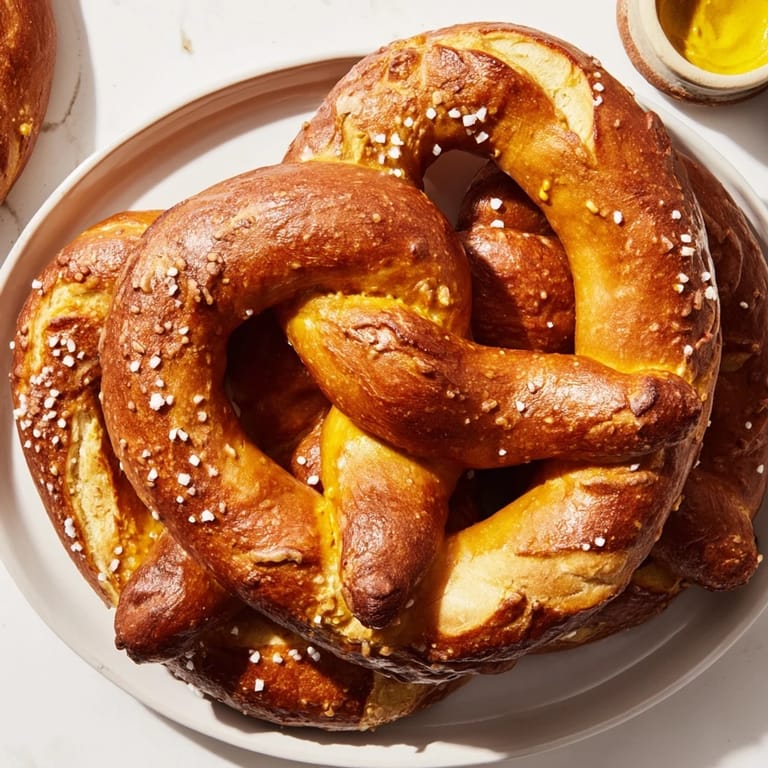
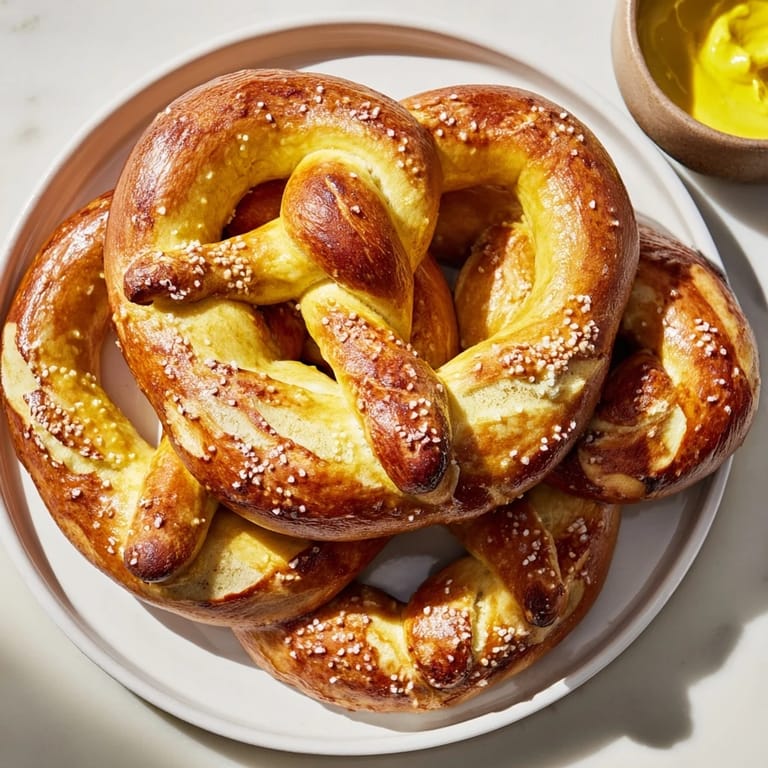
- Brush each one with egg wash so they get that gorgeous shine, then sprinkle coarse salt all over while the egg is still sticky. Don't be shy with the salt—it's what makes a pretzel taste like a pretzel.
- Bake until golden:
- Pop them in the oven for 12-15 minutes until they're deep golden brown on top. They'll smell insane, and your kitchen will smell like a pretzel stand, which is honestly the best smell in the world.
- Cool and serve:
- Let them rest on a wire rack for just a few minutes so the bottom doesn't get soggy, then serve them warm with mustard. Warm is important—room temperature and you've missed the whole point.
 Save
Save I once made these on a random Wednesday evening because I was bored, not for any special occasion. Watching my neighbor smell them from outside my window and then sheepishly asking if I had an extra was the moment I realized these aren't just food—they're a form of hospitality wrapped in dough.
Why the Baking Soda Bath Changes Everything
The baking soda bath isn't just a step—it's the entire reason these taste and feel different from any bread you've made before. When the dough hits that boiling alkaline water, the outside undergoes a chemical transformation that creates that distinctive dark, slightly crispy crust while keeping the inside tender. It's also where the pretzel flavor actually comes from, that subtle tang that makes people say 'these taste like real pretzels' without knowing why.
Shaping Matters More Than You'd Think
I spent my first attempt making oddly shaped pretzels that didn't look like much, but they still tasted good—the shape is more about appearance and even baking than flavor. However, once you get the shape right, they bake more evenly and look impressive enough that people think you're a real baker. The twist isn't complicated; it's just a U with the ends wrapped around and folded down, and it takes maybe thirty seconds per pretzel once you get the muscle memory.
Variations That Actually Work
The beauty of soft pretzels is that once you nail the basic dough and bath, you can experiment without ruining anything. My second-favorite version skips the salt entirely and brushes warm pretzels with melted butter and cinnamon sugar, which turns them into something almost dessert-like but still satisfying. I've also played around with toppings—sesame seeds are great, poppy seeds are classic, and one time I even tried everything bagel seasoning, which shouldn't work but absolutely does.
- For sweet pretzels, brush with melted butter instead of salt and use cinnamon sugar while they're still warm from the oven.
- Try serving with beer cheese sauce, honey mustard, or even a spicy sriracha mayo if you're feeling adventurous.
- Make a batch and freeze them unbaked on a sheet pan, then dip and bake straight from frozen—they just need 3-4 extra minutes.
 Save
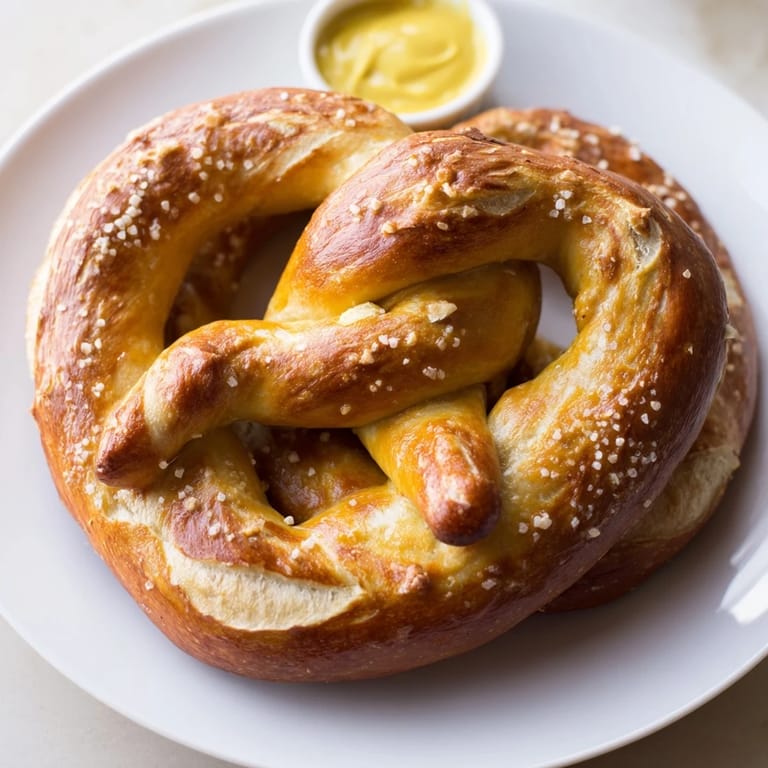
Save These pretzels remind me that some of the best things in a kitchen come from understanding a few simple chemical principles and then just showing up with confidence. Serve them warm, with mustard, and watch what happens.
Recipe FAQs
- → What makes pretzels soft and chewy?
The combination of yeast fermentation, proper kneading, and a baking soda bath before baking creates the soft and chewy texture characteristic of these pretzels.
- → Why use a baking soda bath before baking?
Dipping the dough in a hot baking soda solution gives the pretzels their distinctive crust and deep golden color by affecting the dough's surface during baking.
- → Can I add different toppings to these pretzels?
Yes, besides coarse salt, toppings like sesame or poppy seeds can be sprinkled before baking for added flavor and texture.
- → How should pretzels be served for best taste?
They are best enjoyed warm, ideally paired with yellow or spicy brown mustard to complement their savory flavor.
- → Can the salt be substituted for a sweeter topping?
For a sweeter variation, omit the salt and brush the pretzels with melted butter, then sprinkle cinnamon sugar after baking.