 Save
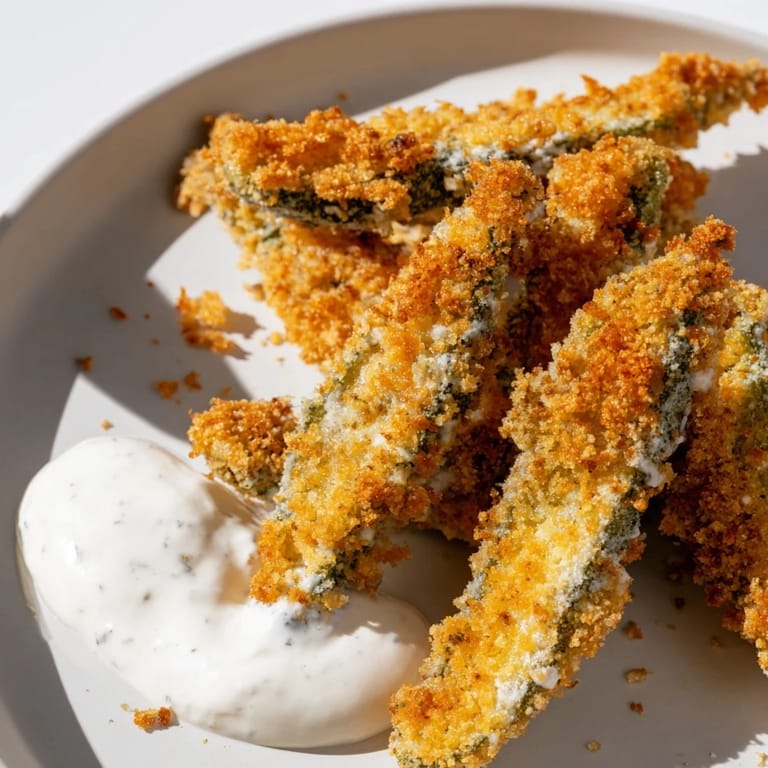
Save My sister brought home fried pickles from a fair one summer, and I'll never forget how I bit into one expecting disappointment—that acidic, briny thing dredged in breading seemed bound to be a mess. Instead, the hot crispy shell gave way to that cold, tangy pickle center, and I was immediately hooked. Now I make them at home whenever I want that same magical contrast, and honestly, they've become my go-to when people are coming over and I need something that feels fancy but actually takes no time at all.
I brought a batch to a game night last year, and they disappeared faster than the actual snacks I'd planned on—someone literally asked if I could just skip everything else and make these all night. That's when I realized these weren't just a fun side dish, they were the kind of food that makes people feel genuinely cared for, even though I'd barely broken a sweat in the kitchen.
Ingredients
- Dill pickle spears: Get ones that are firm and actually tangy; watery supermarket pickles will make soggy centers, so drain and pat them bone dry before breading.
- All-purpose flour: The first coating layer that helps everything stick together, so don't skip it even though it seems redundant.
- Eggs and milk: This mixture is your glue—it binds the breadcrumbs to the pickle and creates steam inside that keeps the center tender.
- Panko breadcrumbs: Rougher texture than regular breadcrumbs means crispier, more satisfying crunch, and it's worth seeking out.
- Garlic powder and paprika: These aren't optional; they add warmth and depth that makes the coating taste intentional rather than plain.
- Cayenne pepper: Start without it if you're unsure, but even a pinch adds a whisper of heat that makes people ask what your secret is.
- Vegetable oil: Use something neutral with a high smoke point; peanut oil works beautifully if you have it.
- Ranch dressing: The cooling counterpoint that makes every bite feel like a small celebration.
Tired of Takeout? 🥡
Get 10 meals you can make faster than delivery arrives. Seriously.
One email. No spam. Unsubscribe anytime.
Instructions
- Get your oil ready:
- Heat vegetable oil in a heavy pot or deep fryer to 350°F, making sure you have at least 2 inches of oil so the pickles can swim freely. If the oil isn't hot enough, they'll soak up grease and feel heavy; too hot and the outside burns before the inside defrosts.
- Build your breading station:
- Line up three shallow bowls in a row: flour in the first, beaten eggs mixed with milk in the second, and breadcrumbs combined with garlic powder, paprika, cayenne, salt, and pepper in the third. This assembly-line approach keeps things clean and your hands only slightly messy.
- Coat each pickle:
- Dredge a pickle spear in flour, tap off the excess, dip it into the egg mixture so it's fully wet, then roll it through the breadcrumb mixture while pressing gently so the coating clings. You'll feel when it's properly coated—there shouldn't be any visible pickle peeking through.
- Fry in batches:
- Gently lower a few breaded pickles into the hot oil and listen for that satisfying sizzle; fry for 2–3 minutes, turning once or twice, until the coating is deep golden and sounds crispy when you tap it. Don't crowd the pot or they'll steam instead of fry.
- Drain and serve:
- Fish them out with a slotted spoon and lay them on paper towels to drain while they're still steaming. Serve immediately with ranch so you catch them while they're still hot on the outside and cool on the inside.
 Save
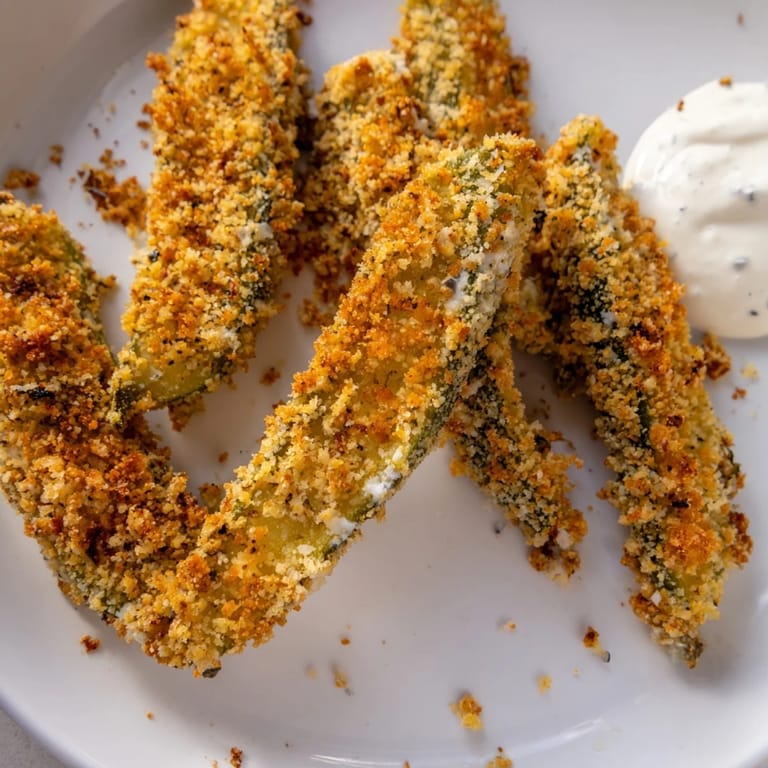
Save There's something quietly perfect about watching someone take their first bite of these—that moment when they discover the hot-and-cold thing is actually real, not just hype. It's the kind of simple pleasure that proves you don't need complicated cooking to impress someone.
The Temperature Game
The oil temperature is genuinely non-negotiable here, and I learned this the hard way after producing a batch of soggy, greasy pickles that nobody wanted to touch. A quick-read thermometer costs about five dollars and will save you from that exact disappointment every single time—think of it as insurance for your snack ambitions. I keep mine clipped to my pot now, and it's become one of my most-used kitchen tools.
Dressing Beyond Ranch
While ranch is the classic move, I've started playing around with other dips and honestly some of them hit harder than the original. A spicy ranch made with sriracha and lime juice adds a tangy kick, blue cheese dressing gives this bar-snack sophistication, and even a simple honey mustard creates this sweet-tangy-salty moment that feels unexpectedly right. The pickles are tangy enough that they pair well with nearly anything cool and creamy, so don't feel locked into tradition if your kitchen is pointing you somewhere else.
Storage and Leftovers
These are absolutely best eaten hot and fresh, but if you somehow end up with leftovers, you can reheat them in a 375°F oven for about 5 minutes to crisp them back up—the microwave will turn them into sad, soggy shadows of themselves, so avoid that path. You can also breade the pickles ahead of time and keep them in the fridge for a few hours before frying, which makes the actual cooking part super quick when guests arrive or hunger strikes unexpectedly.
- Eat them within an hour or two of frying when the contrast between crispy and cool is still magic.
- Refresh cold leftovers in a hot oven rather than a microwave to restore some of that crispness.
- Pre-breading saves time on cooking day if you're planning ahead.
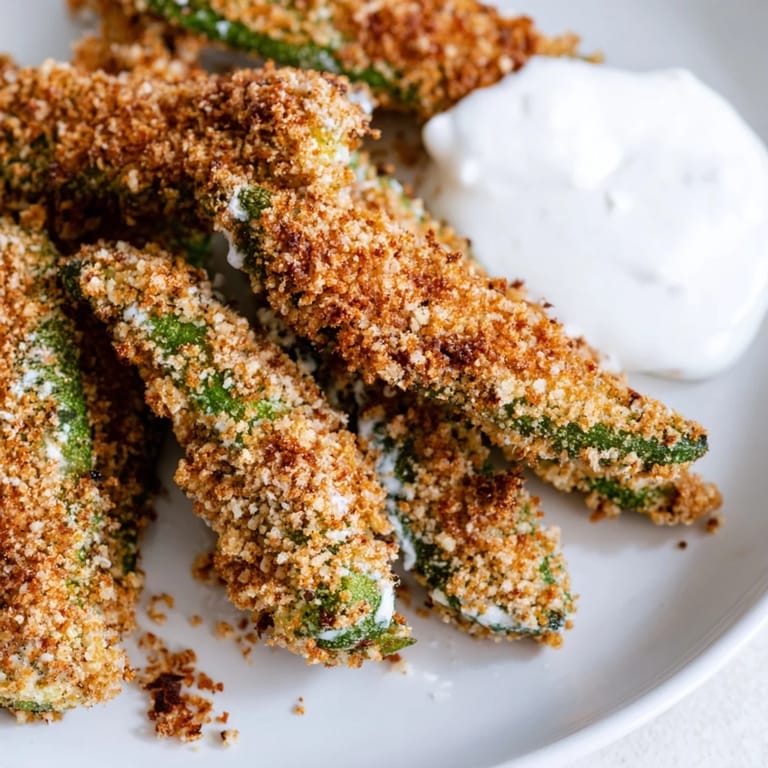 Save
Save These pickles have become my answer to almost every casual gathering, and they've taught me that sometimes the most beloved food is the simplest—just pickles, breadcrumbs, and a moment of heat. That's all it takes to make people genuinely happy.
Recipe FAQs
- → What type of pickles work best?
Large dill pickle spears are ideal, as they hold their shape well and provide a tangy flavor that balances the crispy coating.
- → How can I make the coating extra crispy?
Using panko breadcrumbs instead of regular crumbs adds extra crunch to the coating after frying.
- → Can I add spice to the breading?
Yes, adding cayenne pepper or paprika enhances the flavor and brings a mild heat to the coating.
- → What is the best oil temperature for frying?
Maintain the oil temperature at 350°F (175°C) to ensure the coating crisps quickly without absorbing excessive oil.
- → Are there suitable alternatives for dipping sauce?
Besides ranch, spicy ranch or blue cheese dressings offer great complementary flavors with the crispy dill spears.
- → How can I adapt this for gluten-free diets?
Substitute all-purpose flour and breadcrumbs with gluten-free variants to make the dish suitable for gluten-sensitive individuals.