 Save
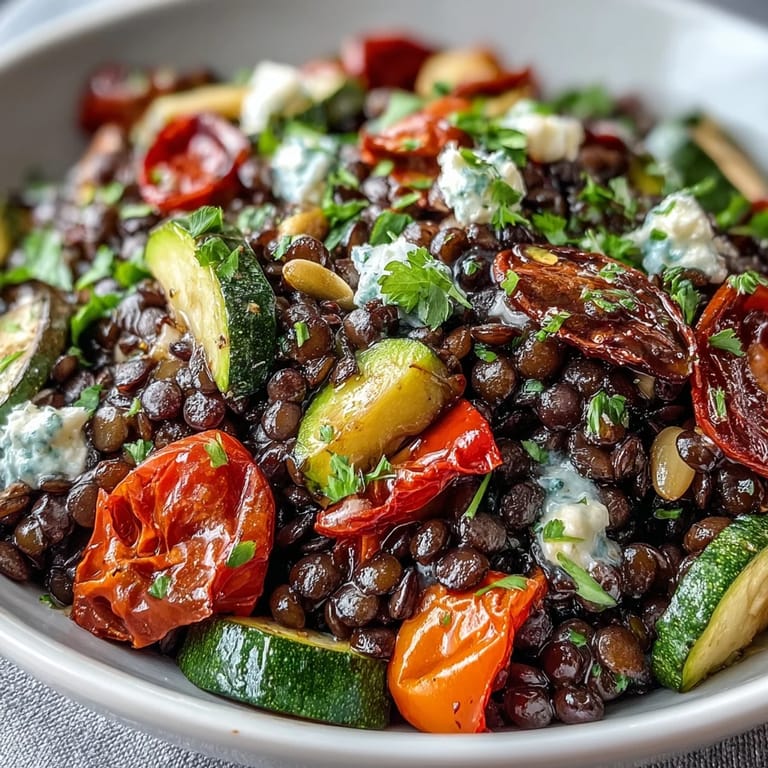
Save One Tuesday afternoon, I stood in my kitchen wondering how to use up a bag of black lentils that had been sitting in my pantry for weeks. The weather was turning warm, and the last thing I wanted was anything heavy, so I started roasting whatever vegetables I had on hand. What emerged was this vibrant, earthy salad that somehow tasted both substantial and impossibly light—the kind of dish that made me realize simple ingredients just needed the right moment to shine.
I brought this to a potluck once, expecting it to sit ignored while everyone crowded around the pasta. Instead, someone went back for thirds and asked for the recipe—then their whole family started making it weekly. That moment taught me that food doesn't need to be complicated to be memorable; sometimes it just needs to be honest.
Ingredients
- Black lentils (Beluga): These tiny, glossy lentils stay firm during cooking when you nail the timing, unlike brown lentils which turn soft and split.
- Water: Use fresh water for cooking, not broth, so the lentils' delicate flavor comes through.
- Bay leaf: This adds a subtle depth that you won't taste directly but will notice if it's missing.
- Red bell pepper, zucchini, red onion, carrot: The color contrast matters here—not just for looks, but because different vegetables caramelize at different rates, creating varied textures in every bite.
- Olive oil (for roasting): Don't skimp on this; it's what helps the vegetables develop those golden, crispy edges.
- Dried thyme: Fresh works too, but dried thyme concentrates its flavor when roasted, making it more forgiving.
- Cherry tomatoes: Add these after cooking so they stay fresh and slightly juicy rather than becoming jammy.
- Feta cheese: A sprinkle goes a long way—it's there for saltiness and tang, not to dominate the plate.
- Fresh parsley: This brightens everything at the last moment; don't skip it or add it too early.
- Seeds (pumpkin or sunflower): Toasting them first brings out their nutty flavor and adds a genuine crunch that stores better than you'd expect.
- Extra-virgin olive oil (for dressing): This is where quality matters since it's raw; cheaper oil tastes thin and flat by comparison.
- Lemon juice: Fresh squeezed makes all the difference, and you'll notice the brightness fade if you make this more than a day ahead.
- Dijon mustard: Just a teaspoon acts as an emulsifier and adds a subtle sophistication that rounds out the acidity.
Tired of Takeout? 🥡
Get 10 meals you can make faster than delivery arrives. Seriously.
One email. No spam. Unsubscribe anytime.
Instructions
- Set your oven to 425°F and prep your pan:
- Line a baking sheet with parchment paper so the vegetables release easily and brown instead of steam. This simple step is the difference between watery vegetables and caramelized ones.
- Start the lentils:
- Combine rinsed black lentils with water, bay leaf, and salt in a medium pot and bring to a boil over medium-high heat. Once boiling, reduce the heat to medium-low and let them simmer uncovered for 20 to 25 minutes—set a timer because overcooked lentils turn into mush and undercooked ones are mealy and unpleasant.
- Roast the vegetables:
- While the lentils cook, toss your diced vegetables with olive oil, thyme, salt, and pepper on the prepared baking sheet, spreading them in a single layer. Pop them in the oven for 20 to 25 minutes, stirring once halfway through, until the edges turn golden and some pieces are slightly caramelized.
- Make the dressing:
- In your large mixing bowl, whisk together the olive oil, lemon juice, Dijon mustard, minced garlic, honey, salt, and pepper until the mixture emulsifies slightly and tastes bright and balanced. Taste it straight from the whisk—you should taste the lemon first, then the garlic, then a subtle sweetness.
- Bring everything together:
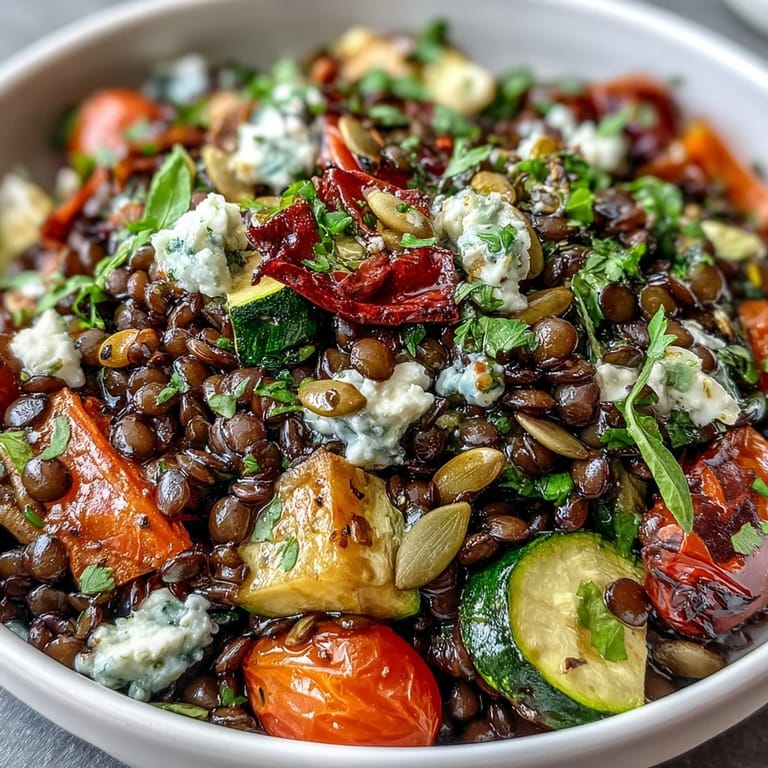
- Once the lentils have cooled slightly (they'll continue cooking from residual heat), drain them and add them to the bowl with the dressing. Add the cooled roasted vegetables, fresh cherry tomatoes, parsley, and toasted seeds, then toss everything gently but thoroughly so every component gets coated. Fold in the crumbled feta at the end if using, just to keep the pieces intact.
- Serve and store:
- This salad is delicious warm, at room temperature, or chilled, making it wildly versatile for different meals. Leftovers actually improve as the flavors meld, so don't hesitate to make this the day before.
 Save
Save 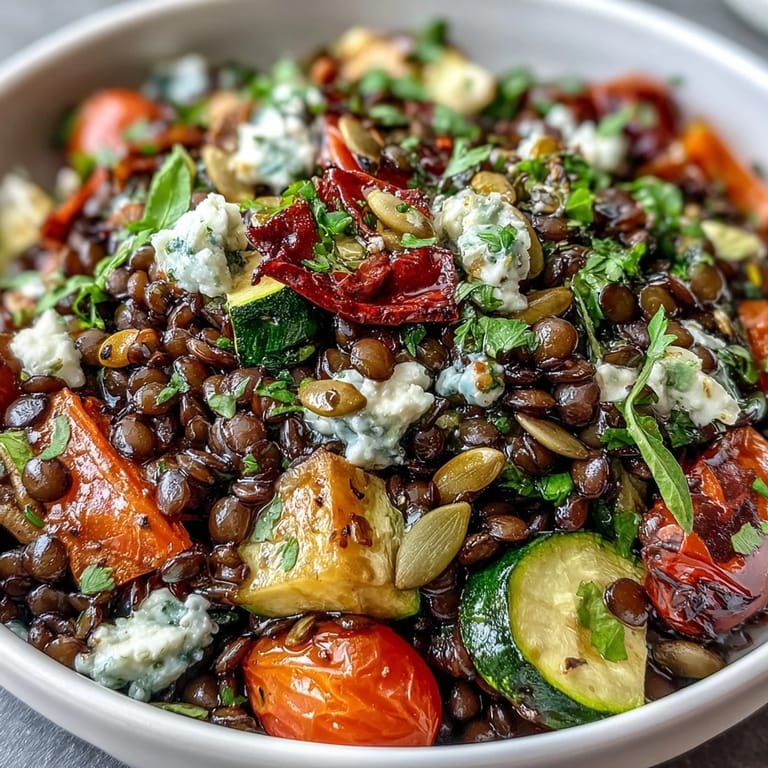 Save
Save There's something quietly magical about eating a salad that actually fills you up without leaving you feeling sluggish. I started making this regularly not because it was trendy, but because my body thanked me for it—and that's when food becomes genuinely worth cooking.
Why This Salad Works for Every Season
In summer, it's cool and refreshing. In winter, you can eat it warm and it feels almost like a grain bowl. Spring is when you add fresh baby spinach, and fall is when you swap in roasted sweet potato or butternut squash instead of some of the other vegetables. The base is flexible enough that you're never bored, yet structured enough that nothing ever goes wrong.
Customizing Without Losing Balance
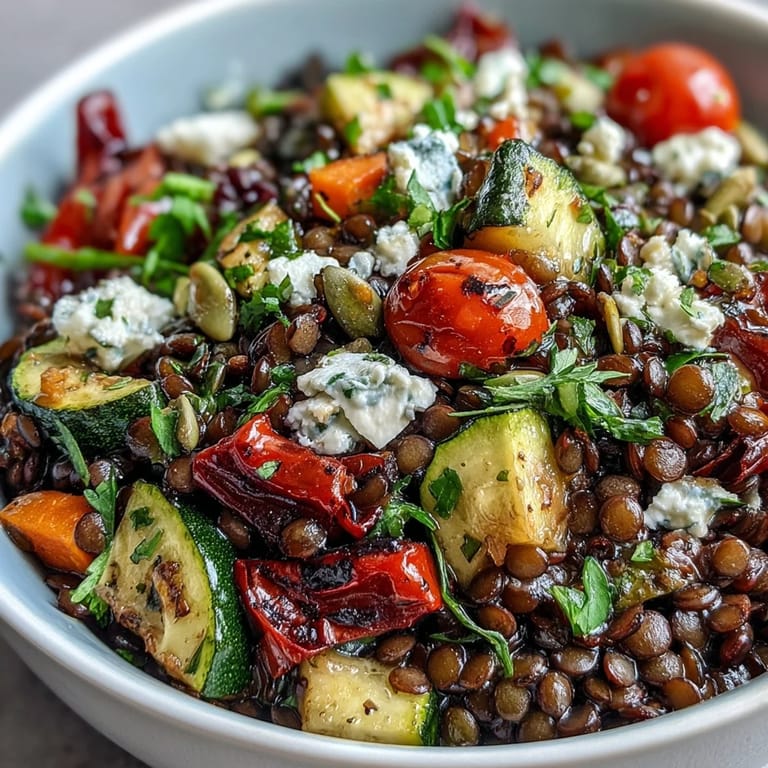
I've made this salad with whatever was in my vegetable drawer, and it's only improved when I trusted my instincts. The key is keeping the ratio of lentils to vegetables roughly equal, and always finishing with something bright—whether that's lemon, fresh herbs, or a squeeze of lime. What matters less is which vegetables you choose and more that you give them enough time to caramelize properly in a hot oven.
Making It Work for Different Diets
This recipe is naturally vegetarian and gluten-free, which means it sits confidently on any table without apologies. For vegan friends, the feta is completely optional—the salad doesn't miss it because the lentils and seeds already provide richness and protein. If someone's bringing grilled chicken or salmon to add on top, the dressing is bright enough to complement it without competing.
- Double the dressing if you're adding grilled protein, as lean meat needs that acidity and fat to shine.
- Swap the feta for nutritional yeast or cashew cream if you're keeping it vegan and want that creamy-salty element.
- Keep seeds separate from the main bowl and sprinkle them on top just before serving, so they stay crunchy instead of softening overnight.
 Save
Save 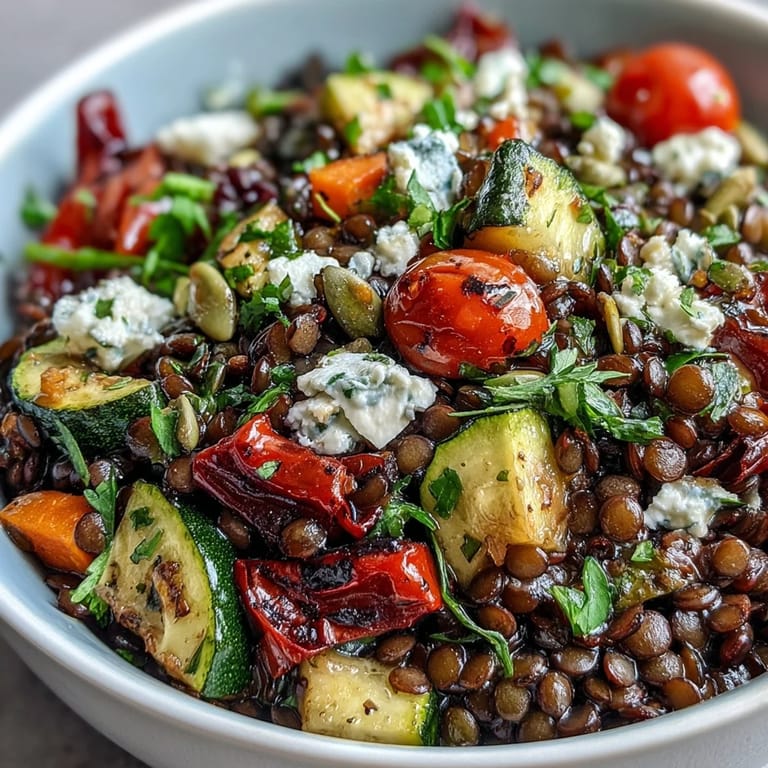 Save
Save This is the kind of salad that proves you don't need much time or skill to create something that tastes both nourishing and genuinely delicious. Make it once, and it'll become part of your regular rotation.
Recipe FAQs
- → Can I use different types of lentils for this salad?
Yes, you can substitute with green or brown lentils, though cooking times may vary. Black Beluga lentils hold their shape well and provide an earthy flavor that complements the roasted vegetables beautifully.
- → How long does this salad keep in the refrigerator?
Store in an airtight container for up to 4 days. The flavors actually deepen over time. Keep the dressing separate if meal prepping to maintain the best texture.
- → Can I make this salad ahead of time?
Absolutely. Cook the lentils and roast the vegetables up to 2 days ahead. Assemble and dress just before serving for optimal freshness, or dress it all and let it marinate for enhanced flavor.
- → What can I serve this with?
This salad pairs wonderfully with grilled chicken, baked salmon, or lamb kebabs. It also stands alone as a complete vegetarian meal, or serve alongside crusty bread and hummus for a Mediterranean feast.
- → How do I prevent the lentils from getting mushy?
Keep a close eye during the final minutes of cooking and test for doneness around the 20-minute mark. Drain immediately when tender but still firm. Beluga lentils naturally hold their shape better than red or yellow varieties.
- → Can I add other vegetables to this salad?
Definitely. Roasted sweet potato, eggplant, or butternut squash work beautifully. Fresh additions like cucumber, radishes, or baby greens add nice crunch and freshness to the warm components.