 Save
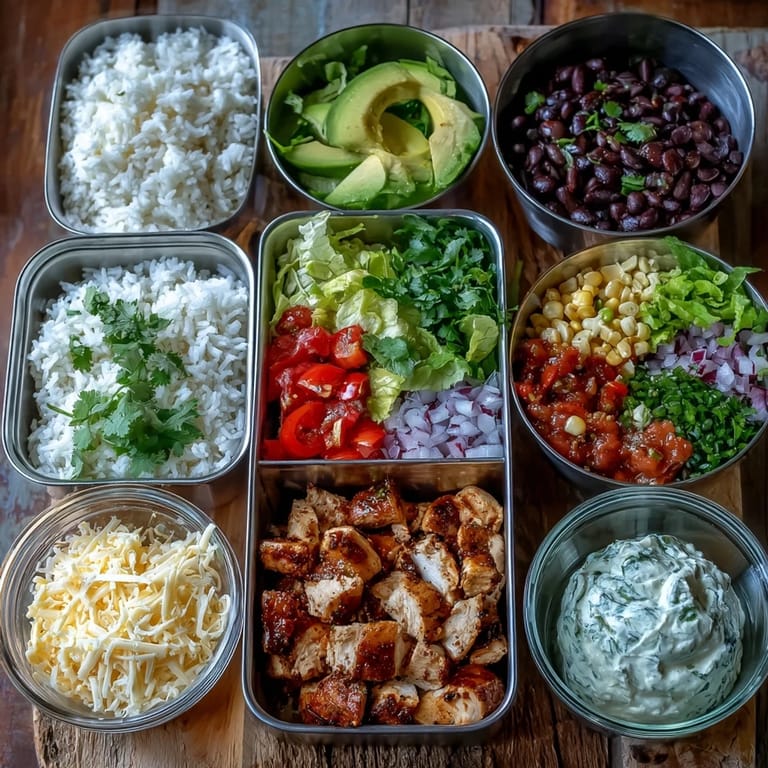
Save Meal prep Sunday became my favorite ritual when I realized I could build an entire week of lunches without eating the same thing twice. A coworker mentioned she'd been rotating burrito bowls, and I thought she meant the same bowl over and over—but then she showed me her system of separate containers, each holding a different component, waiting to be mixed and matched like a delicious puzzle. That conversation changed how I approached weekday eating, transforming something that felt like a chore into something genuinely exciting.
My roommate grabbed one of my prepped bowls without asking and came back genuinely shocked that something from the fridge tasted that good three days later. She watched me dump rice into a container, add beans, protein, and vegetables in neat sections, and said it looked like meal prep Instagram content—except it actually tasted fresh and tasted the way it looked. That moment made me realize this system works because you're not fighting soggy lettuce or beans that have absorbed all the salsa.
Ingredients
- Rice (2 cups cooked): Brown rice keeps you fuller longer if you have it, but white rice is fluffier and more forgiving if you're new to meal prepping—either works beautifully here.
- Black or pinto beans (1 can, drained): Rinse them well and they become this creamy, neutral base that absorbs whatever flavors you pair them with.
- Protein (chicken, ground meat, or tofu): Choose what you'll actually eat five times in a week, because bored of your protein by Wednesday ruins the whole system.
- Red bell pepper (1, diced): Sweet, crisp, and holds up better in the fridge than softer vegetables—this is your structural vegetable.
- Corn (1 cup): Frozen corn is secretly just as good as fresh and already portioned, making this less prep-heavy than it sounds.
- Cherry tomatoes (1 cup, halved): Store these separately and add just before eating or they'll release water and make everything soggy by day three.
- Red onion (1/2, finely diced): Raw, it adds a sharp bite that stays bright all week, and honestly makes the whole bowl taste more interesting.
- Shredded lettuce (1 cup): Keep it in a separate container and add at assembly time—this is non-negotiable for crispness.
- Cheddar or Mexican cheese blend (1 cup shredded): Store in its own small container because moisture from other ingredients will make it clump.
- Salsa or pico de gallo (1/2 cup): Keep separated to prevent the base from becoming watery, and taste yours before committing to a brand.
- Sour cream or Greek yogurt (1/2 cup): Greek yogurt works beautifully here and adds protein, but either one stays fresh longer in a sealed container.
- Avocado (1, sliced or mashed): Slice these fresh each time or they'll brown—this is your one item you can't batch prep.
- Fresh cilantro (1/4 cup, chopped): Add this right at assembly too, because it wilts faster than you'd expect.
- Lime wedges: Fresh lime transforms everything, so squeeze them generously over your assembled bowl.
- Olive oil (1 tbsp): Use it to sauté your protein and warm your beans—it carries all the seasoning flavors.
- Ground cumin, chili powder, smoked paprika (1 tsp each): These three spices together create that authentic burrito flavor that makes everything taste intentional.
- Salt and pepper: Taste as you go when cooking protein and beans—seasoning early prevents bland results.
Tired of Takeout? 🥡
Get 10 meals you can make faster than delivery arrives. Seriously.
One email. No spam. Unsubscribe anytime.
Instructions
- Start with your grain foundation:
- Cook rice according to package directions, then spread it on a plate to cool slightly before storing—this stops it from steaming itself into a mushy brick. If you're using brown rice, start it while you're chopping everything else because it takes longer.
- Choose and season your protein:
- For chicken: cut it into bite-sized pieces, then toss with oil and all your spices before cooking in a skillet over medium-high heat until it's golden and cooked through. For ground meat: brown it in the same skillet, breaking it up as it cooks, then drain excess fat and stir in seasonings. For tofu: press it first to remove moisture, cube it, toss with oil and seasonings, then pan-fry until the edges are crispy and golden.
- Wake up your beans:
- Drain and rinse them, then warm them in a skillet with a splash of olive oil, cumin, and chili powder for two to three minutes—this infuses them with flavor and makes them taste intentional, not canned. Stir occasionally so they heat evenly.
- Prepare all your vegetables:
- Dice your bell pepper, halve your cherry tomatoes, finely dice your red onion, measure your corn, and chop your lettuce—organize them by whether they'll go in the container or be stored separately. Tomatoes, lettuce, cilantro, and avocado all stay out of the base containers.
- Build your meal prep containers strategically:
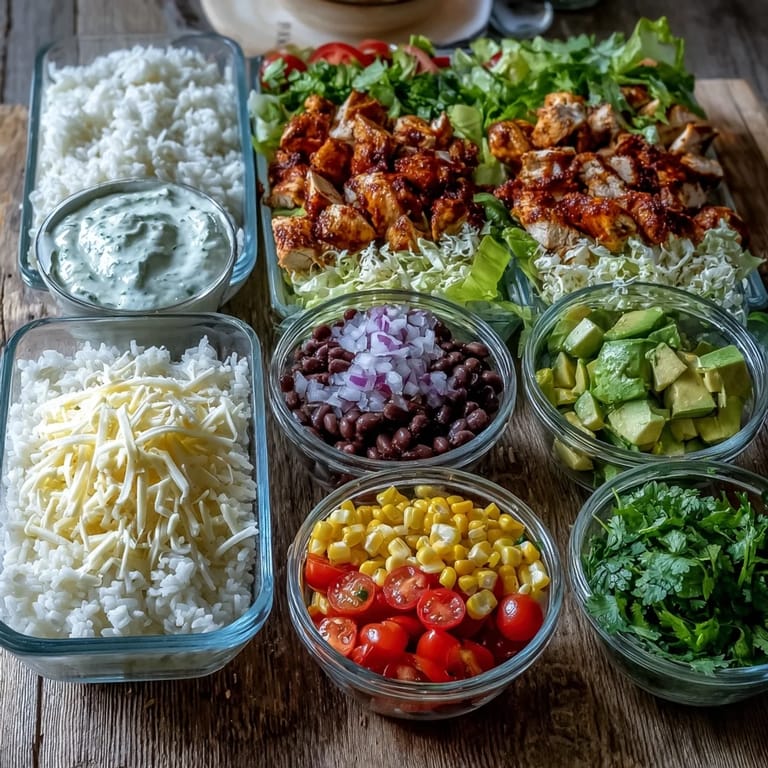
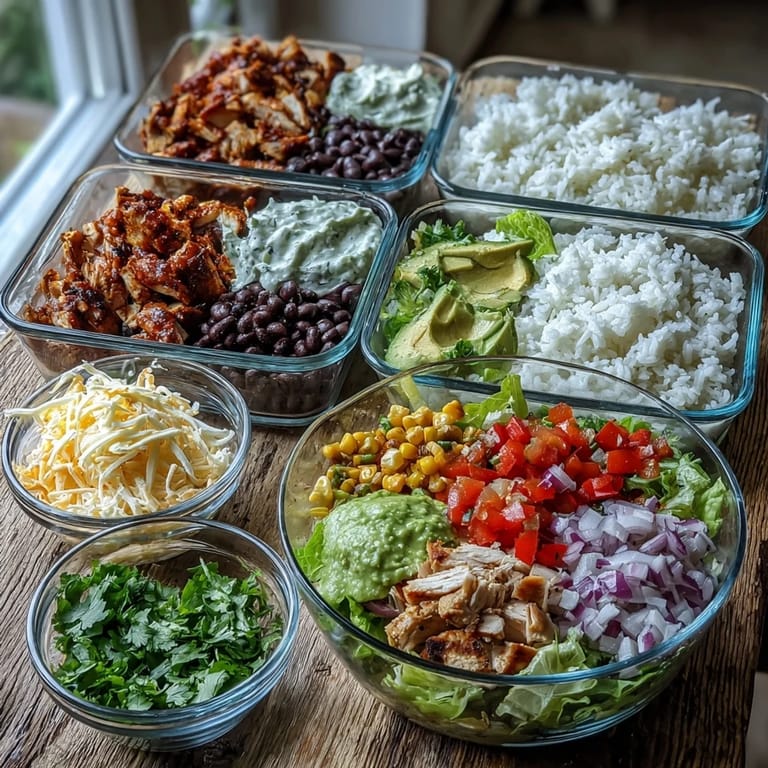
- In four airtight containers, divide rice into the bottom, then add beans, then protein, then the vegetables that won't wilt—bell pepper, corn, and onion. Store cheese, salsa, sour cream, and cilantro in separate small containers so you can customize each bowl.
- Assemble when you're ready to eat:
- Reheat your base containers if desired, then top with lettuce, tomatoes, fresh cilantro, cheese, a dollop of sour cream, fresh avocado slices, and a squeeze of lime. This method keeps everything tasting fresh and lets you adjust flavors bowl by bowl.
 Save
Save My sister tasted one of these bowls while visiting and immediately asked if I'd made it fresh that morning—she couldn't believe it had been in the fridge for two days. That question told me everything about whether my system was actually working. Now she makes her own version every Sunday, and we text each other photos of our variations, which has somehow become our weird sister tradition.
Why Separate Storage Actually Matters
The magic of this whole approach is that you're not creating a sad, compressed stack of flavors and textures that blend into something mediocre by day three. When rice sits next to beans next to protein without a barrier, they start sharing moisture and the whole thing becomes heavy and uniform. Keep those components apart and each bite has distinct flavors—crispy lettuce, creamy beans, seasoned protein—that stay true to what you made on Sunday.
Customization Is the Whole Point
This recipe is genuinely just a framework, not a rule book. Someone wants it vegan on Tuesday but added chicken on Monday because her plans changed—just reheat the beans and tofu instead. Someone's tired of plain lettuce by Friday so she swaps in some spinach she has left over. The containers mean you're not locked into one flavor profile for five days, you're just guaranteeing five fast lunches.
The Timing Game
You'll finish this entire process in under an hour once you've done it once, because chopping becomes automatic and cooking multiple components simultaneously is just smart kitchen choreography. The first time took me closer to ninety minutes because I kept stopping to taste things and reorganize my containers, but that's actually fine—you're making five lunches, so thirty minutes per lunch is legitimately efficient. The real time-saver is realizing you can prep everything on Sunday and never think about lunch again until you're opening a container Monday morning.
- Cook your grains and proteins while simultaneously chopping vegetables—multitasking is your friend here.
- Invest in good, reliable airtight containers or this entire system falls apart by Wednesday.
- Make more protein than you think you need because having extra options all week keeps boredom completely at bay.
 Save
Save There's something quietly satisfying about opening your fridge on a busy Wednesday and knowing lunch is already there, fresh and ready. This system gives you that gift five times over.
Recipe FAQs
- → How long do these bowls last in the refrigerator?
When stored properly in airtight containers, the rice, beans, and cooked protein stay fresh for 4-5 days. Keep vegetables and toppings in separate small containers—they'll remain crisp for 3-4 days. For best quality, reheat only the base components and add fresh toppings just before eating.
- → Can I freeze these burrito bowls?
Yes, the base components (rice, seasoned beans, and cooked protein) freeze beautifully for up to 3 months. Portion into freezer-safe containers and thaw overnight in the refrigerator. Fresh vegetables and toppings like lettuce, tomatoes, avocado, and dairy should not be frozen—add these after reheating.
- → What's the best way to reheat the components?
Microwave the rice, beans, and protein together for 2-3 minutes, stirring halfway through. For better texture, reheat in a skillet over medium heat with a splash of water to prevent drying. Fresh vegetables and toppings taste best at room temperature or slightly chilled, so add these after reheating.
- → How can I make this vegetarian or vegan?
Choose the firm tofu option, seasoned and pan-fried until golden. Omit the cheese and sour cream entirely, or substitute with dairy-free alternatives. Use plant-based yogurt instead of Greek yogurt. The beans and rice provide plenty of protein, and avocado adds healthy fats to keep you satisfied.
- → What other grains work well as the base?
Brown rice adds nutty flavor and extra fiber. Quinoa cooks faster and boosts protein content. Cauliflower rice creates a low-carb version with just 25 calories per cup. For a heartier option, try farro or wheat berries—just adjust cooking time accordingly.
- → Can I prepare everything in advance for the week?
Batch cooking works perfectly here. Cook a large pot of rice, prepare two proteins, and chop all vegetables on Sunday. Store everything in separate containers labeled with the day. Each morning, grab your containers and assemble when ready. This method saves significant time during busy weekdays.