 Save
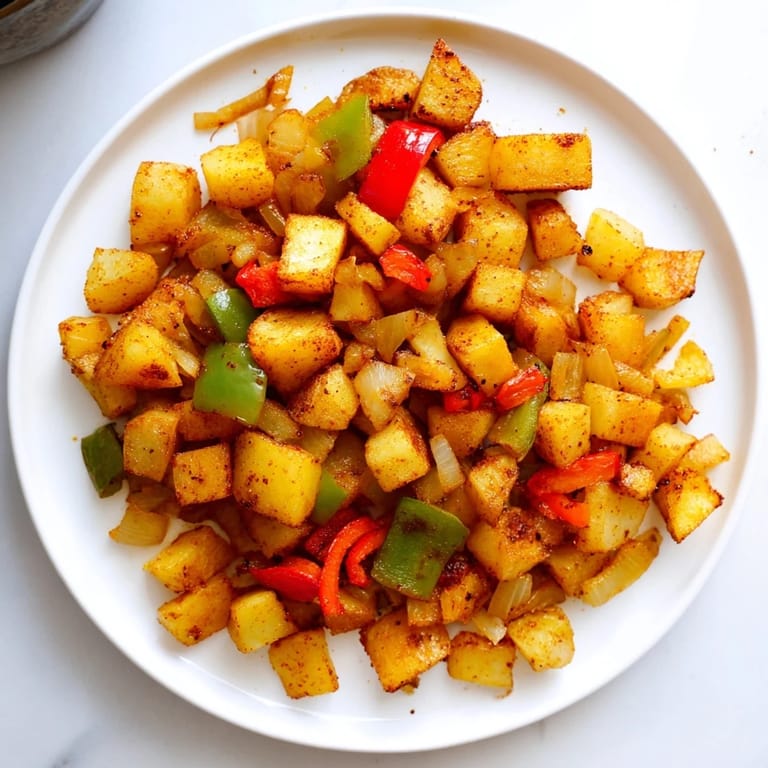
Save My grandmother's cast iron skillet hung above her stove like a trophy, and home fries were her Sunday morning signature. She'd parboil the potatoes while the kitchen filled with steam, then listen for that exact sizzle that meant the oil was ready. I must have watched her make them a hundred times before I realized the magic wasn't just the technique—it was the patience to let those potatoes sit undisturbed, getting gloriously golden before she'd even touch them.
I made these for a camping trip once, cooking on a portable stove while my friends huddled around with their coffee mugs. Someone said, "These taste like the diner I grew up near," and I realized that's exactly what makes home fries perfect—they're comfort in a skillet, no pretense, just honest breakfast food that somehow feels like home no matter where you make it.
Ingredients
- Russet potatoes (4 medium, about 4 cups diced): Starchy and sturdy, they crisp up beautifully without turning to mush. Peel them, cut into half-inch cubes, and don't skip the parboiling—it's the secret to that perfect contrast.
- Yellow onion (1 medium, diced): Sweetness and structure, caramelizing slightly as they soften. One medium onion gives balance without overpowering.
- Bell peppers (1 red, 1 green, diced): Color, slight sweetness, and that satisfying soft bite. The mix of colors isn't just pretty—different peppers add subtle flavor variation.
- Garlic (2 cloves, minced): Added at the end so it stays fragrant and doesn't burn into bitterness.
- Kosher salt (1 ½ teaspoons): Draws out flavors. Start here, taste at the end, and adjust because everyone's salt preference differs.
- Black pepper and smoked paprika (½ teaspoon and ½ teaspoon): The paprika brings warmth and depth; add it if you want complexity, skip if you prefer simplicity.
- Cayenne pepper (¼ teaspoon, optional): Just a whisper of heat. Add it only if your morning needs a little kick.
- Vegetable oil and butter (3 tablespoons oil plus 1 tablespoon butter): Oil handles the high heat, butter adds richness. Together they create the golden crust that makes these special.
Tired of Takeout? 🥡
Get 10 meals you can make faster than delivery arrives. Seriously.
One email. No spam. Unsubscribe anytime.
Instructions
- Parboil the potatoes for a head start:
- Dice your potatoes into roughly half-inch cubes, place them in cold water, and bring to a boil. After 5 to 6 minutes of simmering, they should be just barely fork-tender—still holding their shape but no longer hard in the center. Drain thoroughly and pat dry if you have time; less moisture means more crispy surface.
- Get your skillet singing:
- Heat a large skillet (cast iron is ideal, but stainless steel works) with the oil and butter over medium-high heat until the butter foams and the oil shimmers. This is the moment everything changes—you'll hear the sizzle before you see it.
- Give the potatoes space to brown:
- Spread your parboiled potatoes in a single layer and let them sit undisturbed for 4 to 5 minutes. Resist the urge to stir. You're building crust, and crust requires contact and time.
- Build the full picture:
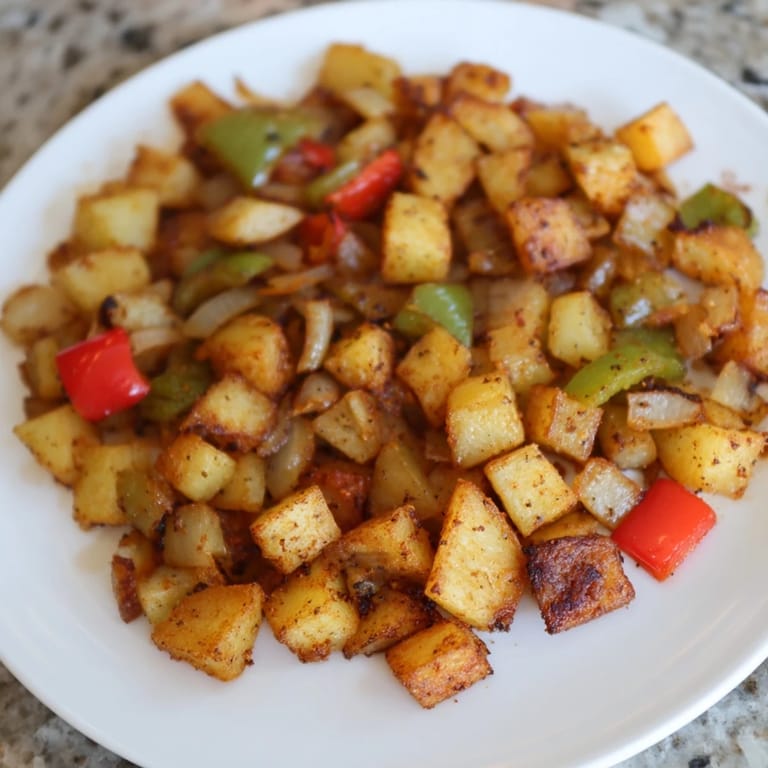
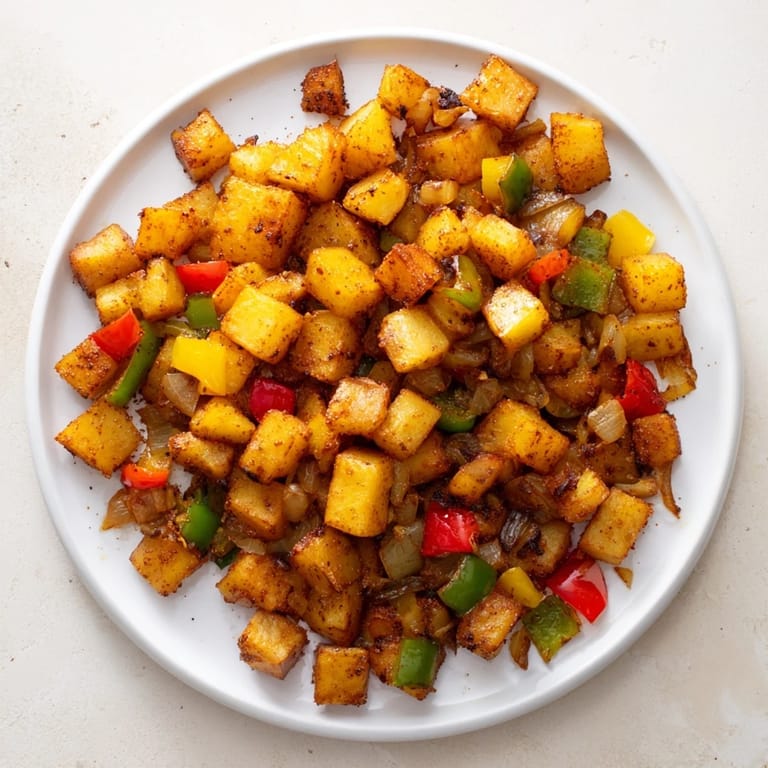
- Now stir in your diced onions and bell peppers, stirring occasionally for 8 to 10 minutes until the vegetables are soft and the potato cubes are golden and crispy on multiple sides. The vegetables release moisture, which actually helps everything cook through evenly.
- Finish with garlic and spice:
- Add your minced garlic, salt, pepper, and optional smoked paprika and cayenne. Stir constantly for 1 to 2 minutes until the garlic becomes fragrant and everything is evenly coated. This is your moment to taste and adjust salt and pepper—trust your palate.
 Save
Save My partner once asked why I always made home fries for Sunday breakfast, and I couldn't quite explain it. It's not just that they taste good—it's that they're reliable, unpretentious, and somehow make whatever else is on the plate taste better. They've never let me down, and they never ask for anything complicated in return.
The Cast Iron Difference
A cast iron skillet holds heat more evenly than stainless steel, and that consistent warmth creates better crust. If you don't have cast iron, stainless steel works fine—just watch the temperature more carefully. The goal is a hot, stable cooking surface that lets those potatoes make contact and caramelize without scorching.
Timing and Temperature
Medium-high heat is your target, not screaming-hot heat. You want the potatoes to brown steadily, not char on the outside while staying raw inside. If your kitchen fills with smoke, your heat is too high—dial it back slightly. The whole process from hot skillet to golden finish should feel leisurely, not rushed.
Variations and Swaps
Once you nail the basic technique, home fries become a canvas. I've added diced jalapeños for heat, swapped in sweet potatoes for earthiness, and even thrown in fresh rosemary when I felt fancy. The foundation stays the same, but the possibilities shift with what's in your kitchen and what you're hungry for.
- Try adding diced jalapeño for a breakfast-burrito vibe.
- Sweet potatoes create a deeper, slightly sweeter version that pairs beautifully with savory toppings.
- Fresh herbs like rosemary or thyme can add complexity if you add them with the garlic.
 Save
Save Home fries are the breakfast side that proves simple is often best. Serve them hot, alongside eggs or whatever makes your morning feel complete.
Recipe FAQs
- → How do I achieve extra crispy home fries?
Pat the potatoes dry thoroughly after boiling to remove excess moisture before sautéing. Cooking them undisturbed in hot oil helps develop a golden, crispy crust.
- → Can I substitute the vegetables?
Yes, swapping bell peppers for sweet potatoes or adding diced jalapeños can add twists in flavor and texture.
- → What is the best cooking oil to use?
Vegetable or canola oil works well for sautéing, balancing heat resistance and flavor. Butter adds richness but can be omitted for dairy-free options.
- → How long should potatoes be parboiled?
Simmer diced potatoes for 5–6 minutes until just fork-tender. This softens them without cooking through, helping with a crispy finish.
- → Are these suitable for gluten-free diets?
Yes, using simple seasonings and fresh vegetables ensures a gluten-free dish. Always verify seasoning labels to avoid hidden gluten.