 Save
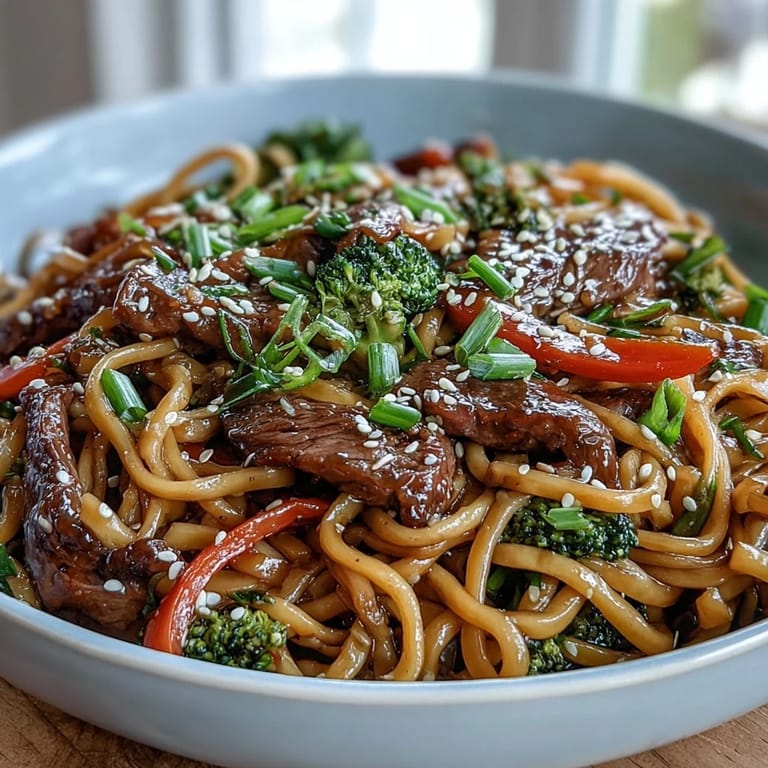
Save The smell hit me before I even opened the door, garlic and ginger tangling in the air like an invitation. My neighbor was cooking something that made my stomach growl, and when I finally asked what it was, she handed me a bowl of glossy noodles wrapped around tender beef and bright vegetables. That night, I stood in my own kitchen with a skillet too hot and noodles that clumped together, but I didn't care. The flavor was worth every awkward toss of the spatula.
I made this for my brother on a Tuesday night when he showed up unannounced and hungry. He sat at the counter, watching me slice the flank steak thinner than I thought possible, and said it smelled like the place we used to go after late shifts. By the time I plated it, he was already reaching for seconds. It became our thing after that, the dish I'd make when words felt too heavy but a warm bowl said enough.
Ingredients
- Rice noodles (8 ounces): These soak up the sauce like little flavor sponges and stay silky if you don't overcook them, so keep an eye on the clock.
- Flank steak (1 pound, thinly sliced against the grain): Slicing against the grain is the difference between tender bites and chewy disappointment, and a sharp knife makes all the difference.
- Broccoli florets (1 cup): They add a satisfying crunch and a pop of green that makes the bowl feel balanced, not just meaty.
- Bell pepper (1, sliced, red or yellow): The sweetness cuts through the salty sauce and the color makes every plate look restaurant-ready.
- Carrot (1, julienned): Thin strips cook faster and twirl around the noodles, adding a slight earthiness and vibrant orange streaks.
- Green onions (2, chopped): Scattered on top, they bring a fresh, sharp bite that wakes up the whole dish.
- Garlic (3 cloves, minced): The base of the fragrance, it blooms in hot oil and fills the kitchen with that unmistakable savory warmth.
- Ginger (1 teaspoon, grated): A little goes a long way, adding a bright, almost spicy note that makes the sauce feel alive.
- Soy sauce (1/3 cup): The salty backbone of the sauce, it coats everything and ties the flavors together in that deep, umami way.
- Brown sugar (2 tablespoons): It balances the salt and gives the sauce a glossy, caramelized edge that clings to every noodle.
- Sesame oil (1 tablespoon): Just a drizzle adds a nutty richness that makes the whole dish feel more complex than it really is.
- Vegetable oil (2 tablespoons): High heat needs a neutral oil that won't burn, and this one gets the skillet screaming hot without any fuss.
- Sesame seeds (for garnish): A sprinkle on top adds a toasty crunch and makes the bowl look like you put in way more effort than you did.
Tired of Takeout? 🥡
Get 10 meals you can make faster than delivery arrives. Seriously.
One email. No spam. Unsubscribe anytime.
Instructions
- Soften the Noodles:
- Cook the rice noodles according to the package directions, usually just a few minutes in boiling water until they're tender but still have a little chew. Drain them well and set them aside so they don't turn into a sticky clump.
- Heat the Skillet:
- Pour the vegetable oil into a large skillet or wok and crank the heat to medium-high until the oil shimmers and almost smokes. A hot pan is the secret to getting that nice sear on the beef without steaming it.
- Sear the Beef:
- Add the thinly sliced flank steak in a single layer and let it sit for a minute before stirring, so it gets a golden-brown edge. Cook for 2 to 3 minutes total, then pull it out and set it aside before it overcooks.
- Bloom the Aromatics:
- Toss the minced garlic and grated ginger into the same hot skillet and stir constantly for about 30 seconds. The smell will hit you fast, nutty and sharp, and that's your cue to move on before it burns.
- Stir-Fry the Vegetables:
- Add the broccoli, bell pepper, and julienned carrot to the skillet and keep everything moving with a spatula or tongs. Cook for about 5 minutes until the vegetables are tender but still have a bite, with bright colors that haven't faded.
- Mix the Sauce:
- While the vegetables cook, whisk together the soy sauce, brown sugar, and sesame oil in a small bowl until the sugar dissolves completely. The sauce should look glossy and smell sweet and salty at the same time.
- Combine Everything:
- Return the beef to the skillet and pour the sauce over the beef and vegetables, stirring to coat everything evenly. The sauce will sizzle and start to thicken almost immediately, clinging to every piece.
- Toss in the Noodles:
- Add the cooked rice noodles to the skillet and gently toss everything together with tongs, lifting and turning until the noodles are evenly coated and warmed through, about 2 minutes. Be gentle so the noodles don't break apart.
- Finish and Serve:
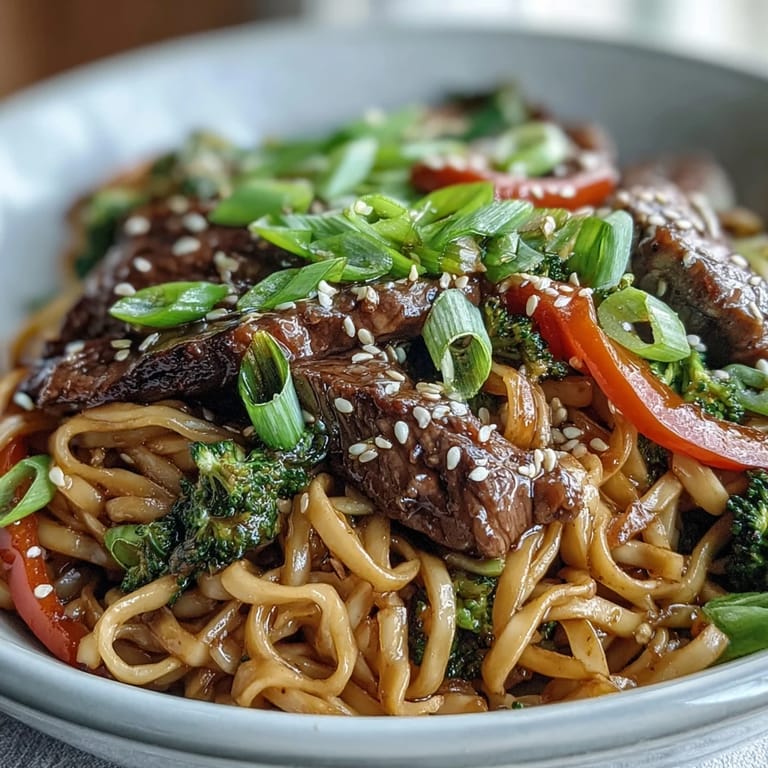
- Sprinkle the chopped green onions and sesame seeds over the top before serving. The garnish adds a fresh crunch and a little visual flair that makes the bowl feel special.
 Save
Save 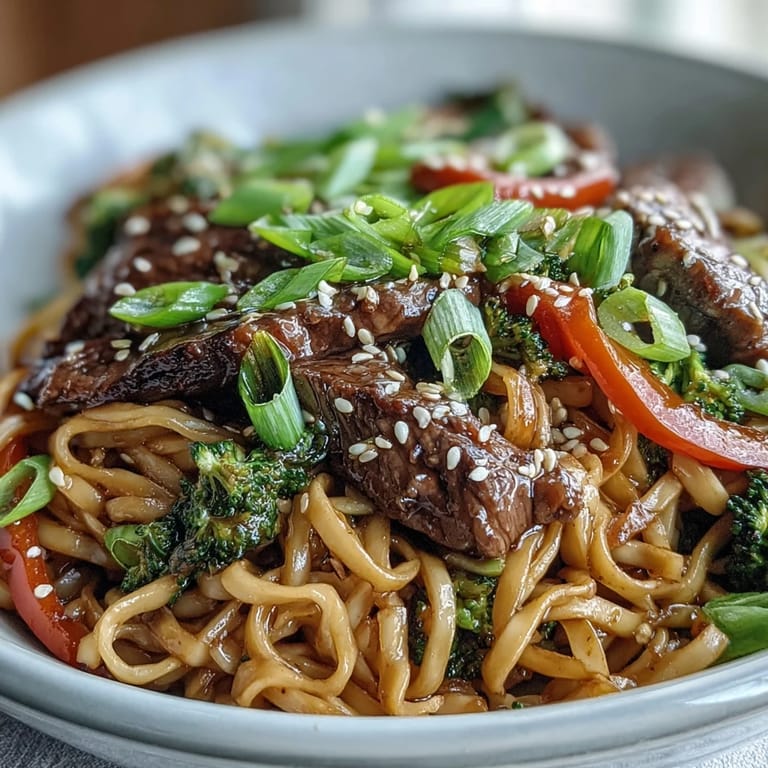 Save
Save One night, I forgot to buy broccoli and threw in snap peas and zucchini instead, and my friend said it was the best version I'd ever made. That's when I realized this recipe isn't precious, it's a framework that bends to whatever's in the crisper drawer. Now I make it with whatever vegetables are starting to wilt, and it always tastes like a small victory. There's something comforting about a dish that doesn't demand perfection but still delivers every single time.
Making It Your Own
This dish practically begs you to experiment, and I've done it more times than I can count. Swap the flank steak for chicken thighs, pork tenderloin, or even crispy tofu if you're feeding a vegetarian. Add snap peas, zucchini, mushrooms, or whatever looks good at the market that week. For heat, I stir in a spoonful of gochujang or a squirt of sriracha right into the sauce, and suddenly it's a completely different bowl. The base stays the same, but the flavor shifts with your mood.
Storing and Reheating
Leftovers keep in an airtight container in the fridge for up to three days, though the noodles soak up more sauce as they sit and the texture softens a bit. I reheat it in a skillet over medium heat with a splash of water or soy sauce to loosen everything up, stirring gently so the noodles don't stick. The microwave works in a pinch, but the skillet brings back that fresh-cooked feel. Sometimes I crack an egg into the reheated noodles and stir it through for a quick, creamy twist that makes lunch feel like a whole new meal.
Serving Suggestions
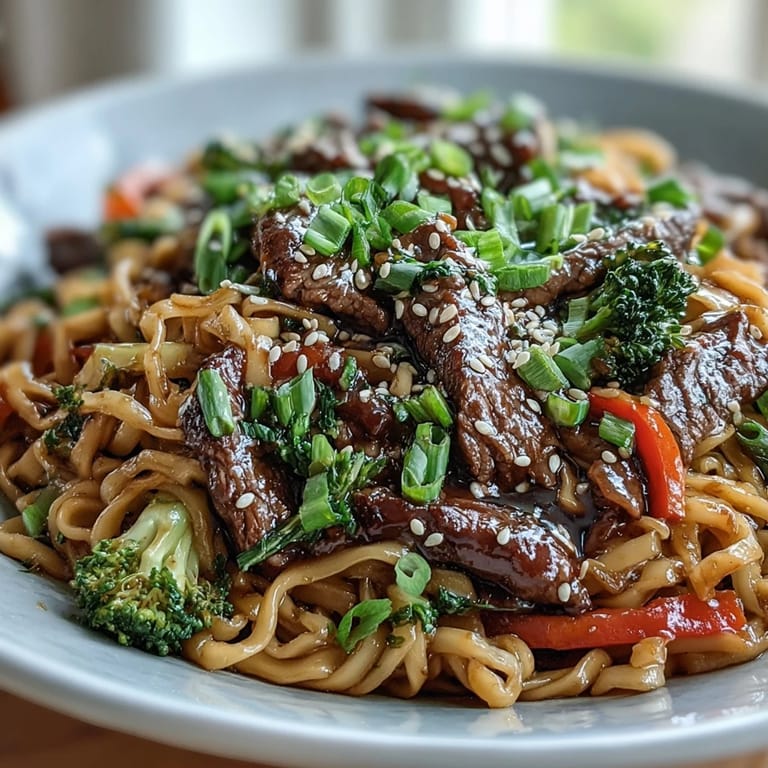
I usually serve this straight from the skillet into shallow bowls, piled high and garnished generously because it looks as good as it tastes. A cold beer or iced green tea on the side cuts through the richness, and a small dish of extra sesame seeds or chili flakes lets everyone adjust their own bowl. If I'm feeling fancy, I'll add a fried egg on top with a runny yolk that mixes into the noodles like a bonus sauce. It's the kind of dish that works for a quiet weeknight dinner or a casual gathering where everyone hovers around the stove with chopsticks.
- Add a fried egg on top for extra richness and a runny yolk that turns into sauce.
- Serve with a side of kimchi or pickled vegetables to balance the sweetness.
- Double the batch and pack the leftovers for lunch, they taste even better the next day.
 Save
Save 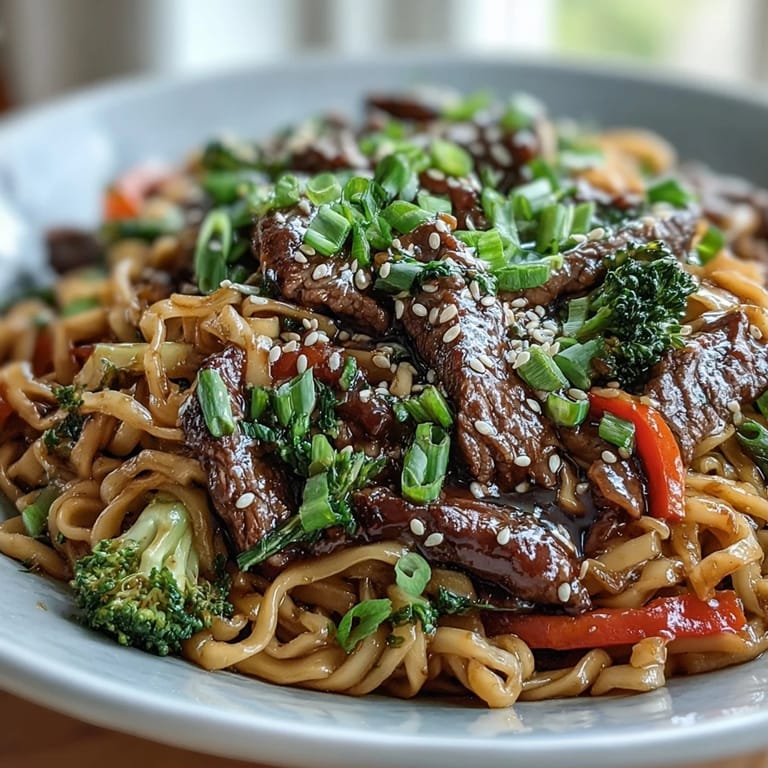 Save
Save This recipe has saved more weeknights than I can count, and it never gets old. Every time I make it, someone asks for the recipe, and I tell them it's easier than it looks.
Recipe FAQs
- → What cut of beef works best?
Flank steak is ideal because it's lean and absorbs flavors beautifully when sliced thinly against the grain. Sirloin or skirt steak also work well if flank isn't available.
- → Can I make this spicy?
Absolutely. Stir in sriracha or gochujang Korean chili paste into the sauce mixture. Start with one teaspoon and adjust to your preferred heat level.
- → What vegetables can I add?
Snap peas, zucchini, baby corn, or mushrooms make excellent additions. Keep total vegetable quantity similar to maintain proper sauce-to-ingredient ratio.
- → How do I prevent soggy noodles?
Cook rice noodles according to package directions, then drain immediately and rinse with cold water. This stops cooking and prevents them from becoming mushy when tossed with sauce.
- → Can I substitute the protein?
Sliced chicken breast, firm tofu cubes, or shrimp all work wonderfully. Adjust cooking times accordingly—chicken and shrimp need 3-4 minutes, tofu just 2 minutes to brown.