 Save
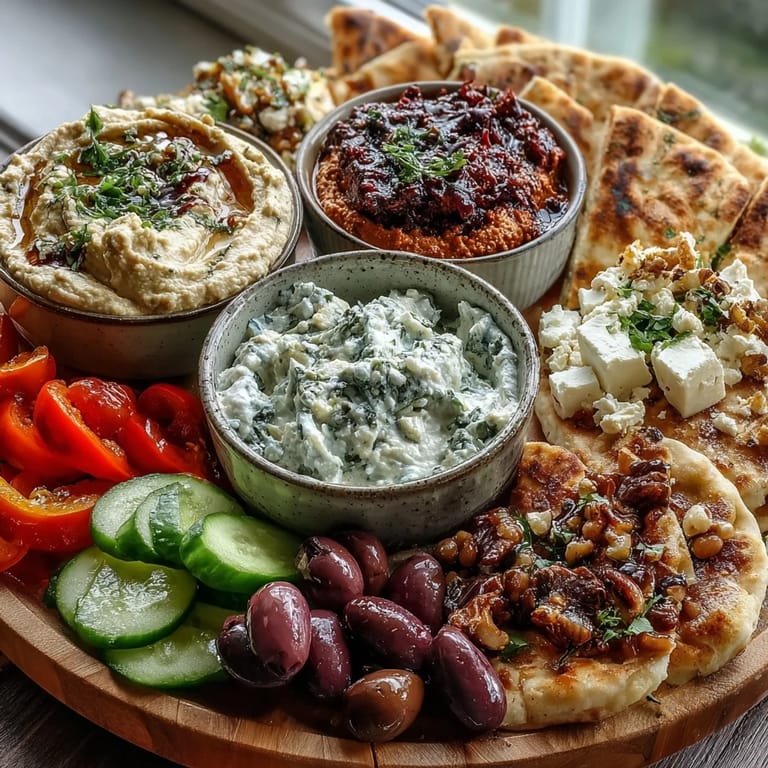
Save Sunday mornings used to mean elaborate pancake spreads until a friend from Crete showed up with bowls, dips, and a platter that changed everything. We stood around the counter grazing, talking, and laughing for hours without anyone needing to sit down for a formal meal. That relaxed energy stuck with me, and now this board is my answer to hosting without hovering over the stove. It transforms brunch into something interactive and effortlessly inviting.
I made this for a baby shower once, worried it wouldnt feel special enough. Instead, people kept circling back to the board, trying new combinations and debating which dip deserved the last flatbread. One guest folded cucumber into hummus with feta and declared it her new favorite bite. Watching people get playful with their plates reminded me that food doesnt need to be fussy to feel memorable.
Ingredients
- Hummus: The creamy anchor of the board, it should be silky and balanced with enough lemon to brighten the richness of tahini.
- Tzatziki sauce: Cooling and tangy, this yogurt based dip needs well drained cucumber or it will turn watery and lose its thick, scoopable texture.
- Baba ganoush: Roasting the eggplant until the skin blisters gives this dip its signature smoky depth that store bought versions rarely capture.
- Roasted red pepper dip: Sweet and slightly charred, it adds a pop of color and a mellow contrast to the sharper flavors on the board.
- Cucumber: Crisp and refreshing, it works as both a dipper and a palate cleanser between richer bites.
- Cherry tomatoes: Halved so they release a little juice, they bring brightness and acidity that cuts through creamy dips.
- Bell pepper: Thick slices offer satisfying crunch and a natural sweetness that pairs beautifully with tangy or smoky flavors.
- Assorted olives: Briny and bold, they add bursts of salt that make everything else taste more vibrant.
- Feta cheese: Crumbly and tangy, it melts slightly on warm flatbread and complements nearly every element on the platter.
- Mixed nuts: Toasted nuts add richness and texture, and they disappear faster than you expect once people start snacking.
- Pita breads and flatbreads: Warm or toasted, they serve as edible utensils and soak up every last bit of dip without falling apart.
- Olive oil: A final drizzle ties everything together and adds a glossy finish that makes the board look polished and intentional.
- Fresh herbs: A scatter of parsley or oregano brings color, fragrance, and a hint of garden freshness to the finished platter.
Tired of Takeout? 🥡
Get 10 meals you can make faster than delivery arrives. Seriously.
One email. No spam. Unsubscribe anytime.
Instructions
- Prepare the hummus:
- Blend chickpeas, tahini, lemon juice, garlic, and salt in a food processor until the mixture is smooth and creamy. Add water a tablespoon at a time until it reaches a soft, swoopable consistency that holds its shape in the bowl.
- Prepare the tzatziki:
- Grate the cucumber, then squeeze it hard in a clean towel to remove as much liquid as possible before mixing it with Greek yogurt, garlic, olive oil, dill, and salt. Refrigerate for at least an hour so the flavors can meld and the dip thickens properly.
- Prepare the baba ganoush:
- Roast the whole eggplant until the skin is charred and the flesh collapses inward, then scoop out the soft interior and blend it with tahini, olive oil, lemon juice, and salt. The smokiness from the roasted skin is what makes this dip unforgettable.
- Spoon all dips into separate bowls or ramekins:
- Use shallow bowls so guests can easily scoop without their flatbread breaking. Small ramekins work beautifully for this and keep the board looking tidy.
- Arrange the dips on a large serving board or platter:
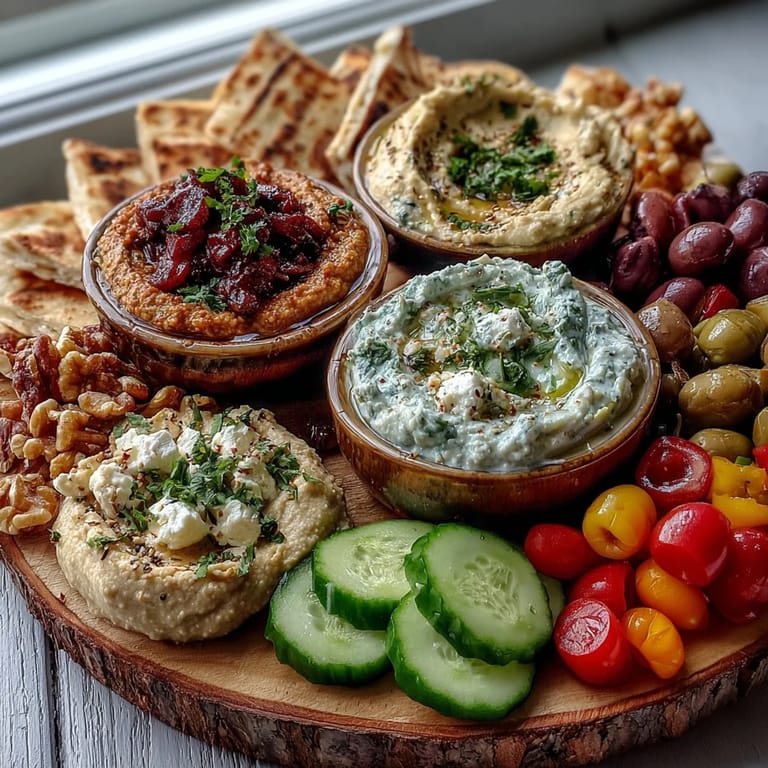
- Place the bowls first to anchor the layout, spacing them evenly so each dip gets its moment. Leave enough room around them for vegetables and bread to nestle in.
- Neatly place the sliced cucumber, halved cherry tomatoes, and sliced bell pepper around the dips:
- Cluster vegetables by type or color to create visual interest and make it easy for guests to grab what they want. Overlapping slices slightly adds movement and fullness to the board.
- Scatter the olives and crumbled feta cheese across the board:
- Distribute them in small piles rather than one big clump so every section of the platter has something salty and tangy. This encourages people to explore the entire board.
- Fill small sections of the board with mixed nuts for crunch:
- Tuck them into gaps between vegetables or next to the dips for texture contrast. They add richness and keep the board from feeling too light.
- Arrange the pita and flatbread pieces around the platter for easy dipping:
- Stand some pieces upright or layer them in stacks so they take up less space but remain accessible. Warm them briefly before serving for extra appeal.
- Drizzle the assembled platter with olive oil and garnish generously with fresh herbs:
- Use a light hand with the oil so it pools slightly in the dips without making the vegetables slippery. Scatter herbs over everything to bring the whole board together visually.
- Serve immediately and encourage guests to mix and match flavors:
- Set the board on a central table and let people build their own bites. The best combinations happen when guests feel free to experiment.
 Save
Save A neighbor once told me this board reminded her of summer afternoons in Santorini, even though we were in a cramped kitchen in November. She said it was the way everything tasted alive and unrushed, like a meal meant to be lingered over. That comment stayed with me because it captured exactly what I love about this kind of food, it slows time down without any effort at all.
Making It Your Own
This board adapts easily to whatever you have on hand or what your crowd prefers. Swap out the roasted red pepper dip for a spicy harissa spread if you want heat, or add marinated artichokes and sun dried tomatoes for extra tang and color. I once threw in pickled turnips from a Middle Eastern market, and they became the unexpected star of the platter. The key is balancing creamy, crunchy, briny, and fresh so every bite feels complete without needing a fork.
Storage and Timing
All the dips can be made a day ahead and stored in airtight containers in the fridge, which makes day of assembly fast and stress free. The tzatziki actually improves after sitting overnight as the garlic mellows and the dill infuses the yogurt. Just pull everything out an hour before serving so the dips come to room temperature and their flavors wake up. Leftover dips keep for three to four days and make excellent quick lunches with leftover flatbread or vegetables.
Serving Suggestions
This board works beautifully alongside scrambled eggs or a frittata if you want to make brunch feel more substantial. A crisp white wine like Assyrtiko or a sparkling water with lemon keeps the meal light and refreshing. I also love setting out small plates so guests can build their own mini tastings rather than hovering over the main board the whole time.
- Offer toothpicks for olives and feta so guests can grab them without using their fingers.
- Keep extra flatbreads warming in the oven wrapped in foil so you can refresh the board halfway through.
- Label the dips with small cards if your guests arent familiar with Mediterranean flavors, it invites curiosity instead of hesitation.
 Save
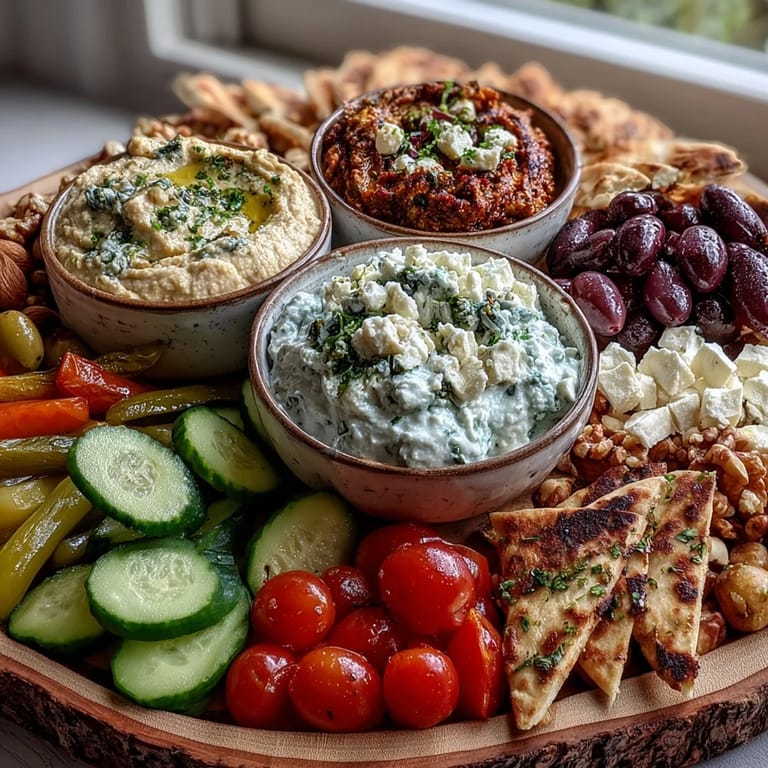
Save This board has become my favorite way to welcome people without disappearing into the kitchen. It proves that the best meals are the ones where everyone lingers, talks, and reaches for just one more bite.
Recipe FAQs
- → Can I prepare the dips in advance?
Absolutely. All four dips—hummus, baba ganoush, tzatziki, and roasted red pepper—can be made up to two days ahead and stored in airtight containers in the refrigerator. The flavors actually develop and improve after resting overnight. Just give them a good stir before serving and add a splash of olive oil or lemon juice to refresh the consistency if needed.
- → What vegetables work best on this Mediterranean board?
Crisp vegetables that hold their shape well are ideal. Beyond the classic cucumber rounds, cherry tomatoes, and bell pepper strips, consider adding radishes, carrot sticks, snap peas, or baby artichokes. The key is choosing vegetables that offer satisfying crunch and can easily be dipped or piled onto flatbreads.
- → How can I make this board gluten-free?
Simply swap the pita breads and flatbreads for gluten-free alternatives. Many stores offer excellent gluten-free pita, or you can use rice crackers, corn tortilla chips, or even sliced gluten-free bread toasted until crisp. The dips themselves are naturally gluten-free, though always check labels on store-bought varieties to be certain.
- → What's the best way to arrange the board for presentation?
Start by placing small bowls or ramekins for each dip in a slight arc across the center of your platter. Arrange vegetables in sections around the dips, grouping by color for visual impact. Scatter olives, nuts, and feta in the gaps, and fan flatbreads around the perimeter. Finish with a generous drizzle of olive oil and fresh herbs. The goal is a colorful, abundant look that invites guests to dig in.
- → Can I customize the nuts and cheese add-ons?
Certainly. While almonds, walnuts, and pistachios provide wonderful crunch, you can also add pine nuts, cashews, or even roasted chickpeas. For cheese, beyond feta, consider fresh goat cheese crumbles, manchego, or even small mozzarella balls. Marinated artichokes, sun-dried tomatoes, or roasted peppers also make excellent additions to fill in any empty spaces on the board.