 Save
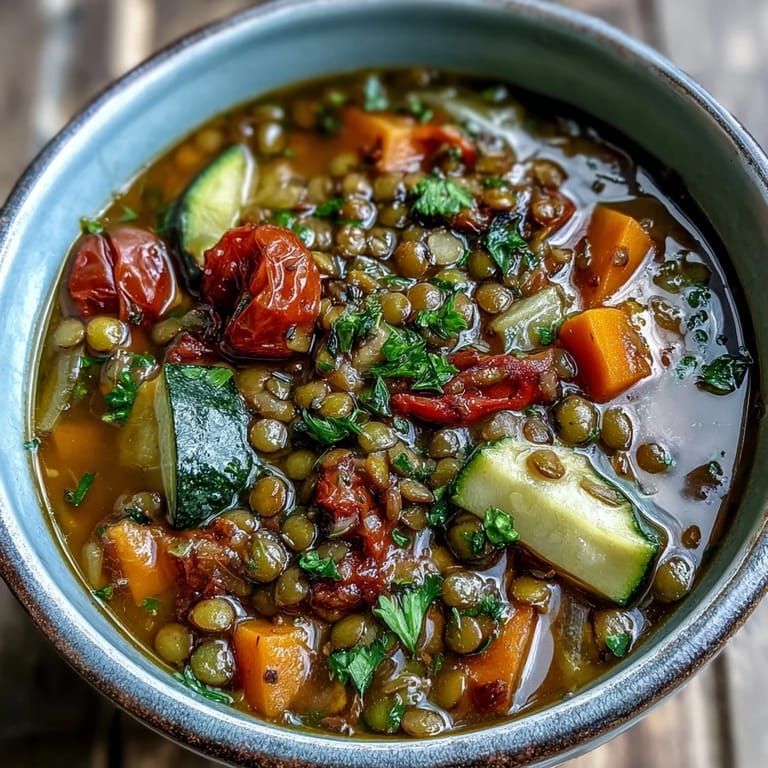
Save My neighbor once complained that soup-making felt intimidating, so I invited her over on a chilly Tuesday and we made this together, just the two of us in my tiny kitchen. Watching her face light up when she tasted it—that perfect moment when the roasted vegetables had turned golden and the lentils had softened into something almost creamy—I realized this soup isn't about fancy technique at all. It's about layering flavors the smart way: roasting first, then simmering, letting everything meld into something that tastes like it took hours when it really took minutes of actual hands-on work.
I made this for my sister during her first week of a new job, when she was too stressed to think about cooking. She came over straight from work, and by the time we sat down with warm bowls, she'd already started talking about something other than office drama—that's when I knew the soup had done its job.
Ingredients
- Green or brown lentils (1 cup, rinsed): Brown lentils hold their shape better than red ones, which tend to get mushy; rinsing them removes dust and grit that nobody wants crunching between their teeth.
- Carrots (2 medium, diced): The natural sweetness intensifies when roasted, so don't skip this step or you'll lose one of the soup's best flavor layers.
- Celery (2 stalks, diced): It builds an aromatic base that makes the whole kitchen smell welcoming the moment it hits the hot oil.
- Zucchini (1 medium, diced): Roasting softens it and prevents that watery texture uncooked zucchini sometimes brings to soups.
- Red bell pepper (1, diced): Choose one that's firm and glossy; the roasting will coax out its natural sugars.
- Yellow onion (1 medium, chopped): This is your flavor foundation—don't rush the sautéing, give it those full 4 minutes to become translucent and sweet.
- Garlic (3 cloves, minced): Fresh garlic makes all the difference; jarred or powder just won't deliver that bright, sharp note.
- Cherry tomatoes (1 cup, halved): They burst slightly when roasted, releasing their juice into every bite of soup.
- Olive oil (2 tablespoons total): Use good quality oil; it's one of the few ingredients you'll actually taste in every spoonful.
- Vegetable broth (6 cups): If your broth tastes bland, the whole soup will too, so taste yours beforehand and add a pinch of salt if needed.
- Dried thyme, oregano, and smoked paprika (1 teaspoon each): These three herbs work together to build a subtle complexity that makes people ask what your secret is.
- Bay leaf (1): Always remove it before serving—biting into one is never pleasant.
- Salt, pepper, and fresh parsley (to taste): The lemon juice at the end is optional but highly recommended; it brightens everything and pulls the flavors forward.
Tired of Takeout? 🥡
Get 10 meals you can make faster than delivery arrives. Seriously.
One email. No spam. Unsubscribe anytime.
Instructions
- Get your oven going and prep the vegetables:
- Preheat to 425°F and while it's heating, dice your carrots, celery, zucchini, and bell pepper into roughly bite-sized pieces—they don't need to be perfect, just uniform enough so they cook at the same rate. Halve those cherry tomatoes and toss everything with 1 tablespoon olive oil, a good pinch of salt, and some black pepper.
- Roast until they're caramelized:
- Spread the vegetables on your baking sheet in a single layer and slide them into the oven for 20 minutes. You'll know they're done when the edges have turned a deep golden brown and the kitchen smells like concentrated vegetable goodness.
- Build your flavor base:
- While the vegetables roast, heat the remaining 1 tablespoon olive oil in a large pot over medium heat. Once it's shimmering, add your chopped onion and let it sit undisturbed for the first minute or so, then stir occasionally for about 3 more minutes until it becomes soft and translucent.
- Add the garlic:
- Stir in your minced garlic and cook for just 1 minute—you want to wake up its aroma, but not let it brown and turn bitter.
- Combine everything and simmer:
- Add your rinsed lentils, the roasted vegetables (they should be coming out of the oven right about now), vegetable broth, thyme, oregano, smoked paprika, and bay leaf. Stir well, bring it all to a boil, then immediately reduce the heat to low and let it simmer uncovered for 25 minutes.
- Finish and taste:
- Once the lentils are completely tender when you bite one, fish out the bay leaf and give the soup a taste. Adjust seasoning with salt, pepper, and the lemon juice if you're using it—sometimes that brightness is exactly what the soup needs to feel complete.
- Serve hot:
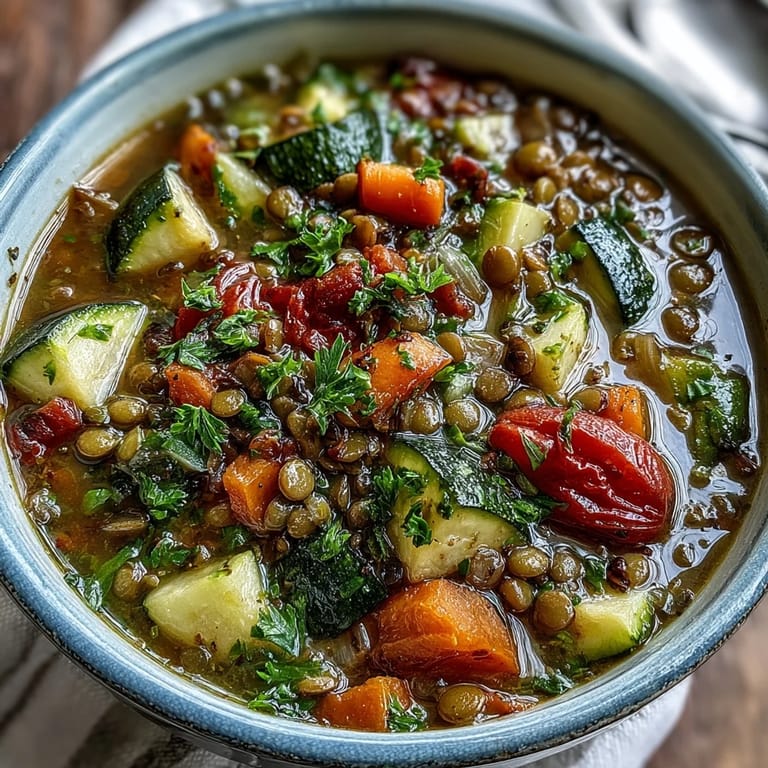
- Ladle into bowls and top with fresh chopped parsley if you have it and feel like it adds a nice color contrast.
 Save
Save  Save
Save There was something magical about watching my six-year-old niece actually ask for a second bowl without being asked, sitting at the kitchen counter and carefully blowing on each spoonful. In that moment, this soup shifted from just being dinner to being something I'd want to make again and again.
The Roasting Secret
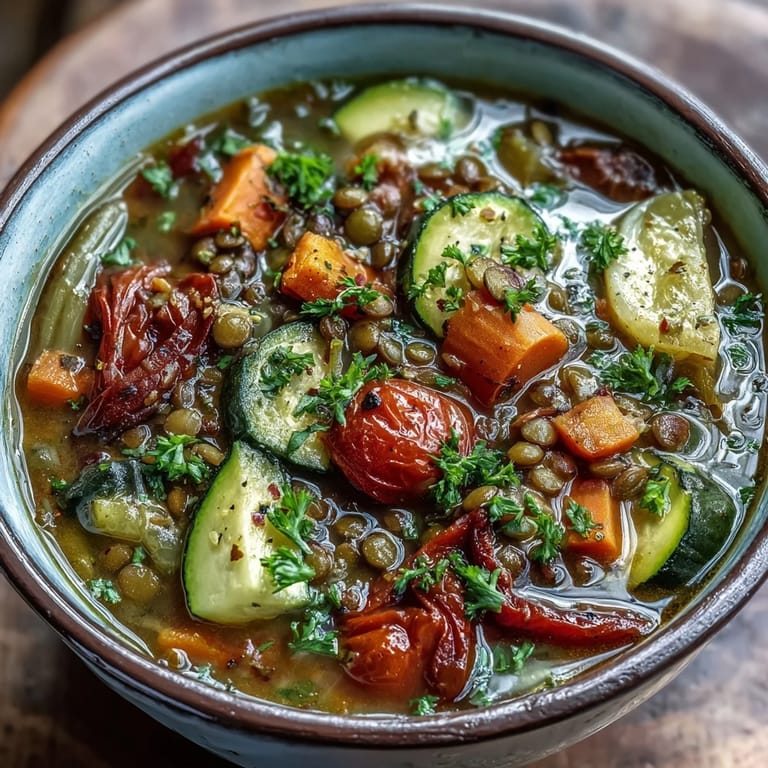
The magic moment happens when those vegetables hit a hot oven and start to caramelize at the edges. The natural sugars in the carrots and bell pepper intensify, and the moisture evaporates just enough so you get concentrated flavor instead of diluted vegetable taste. This is why pre-roasting matters so much—it's the difference between a soup that tastes like boiled vegetables and one that tastes intentional.
Customizing Your Soup
This soup is honestly forgiving in the best ways. If you don't have zucchini, butternut squash works beautifully and brings its own natural sweetness. Don't like bell peppers? Swap in fresh spinach during the last few minutes of cooking, and it'll wilt right in. If you want to add richness, a tablespoon of tomato paste stirred in with the garlic will deepen the flavors without making it heavy.
Storing and Reheating
This soup keeps beautifully in the refrigerator for up to four days in an airtight container, and it actually tastes better the next day once all the flavors have had time to get to know each other. To reheat, just warm it gently on the stovetop over medium heat, stirring occasionally, and add a splash of broth or water if it's thickened too much during storage. Freezing works too—just know that the texture of the vegetables softens a bit, but the flavor remains just as good.
- Make a bigger batch and freeze half in individual portions for future rushed weeknights.
- Add the lemon juice fresh when you're eating it, not before storing, so the brightness doesn't fade.
- A crusty piece of bread on the side transforms this from soup into a complete, satisfying meal.
 Save
Save 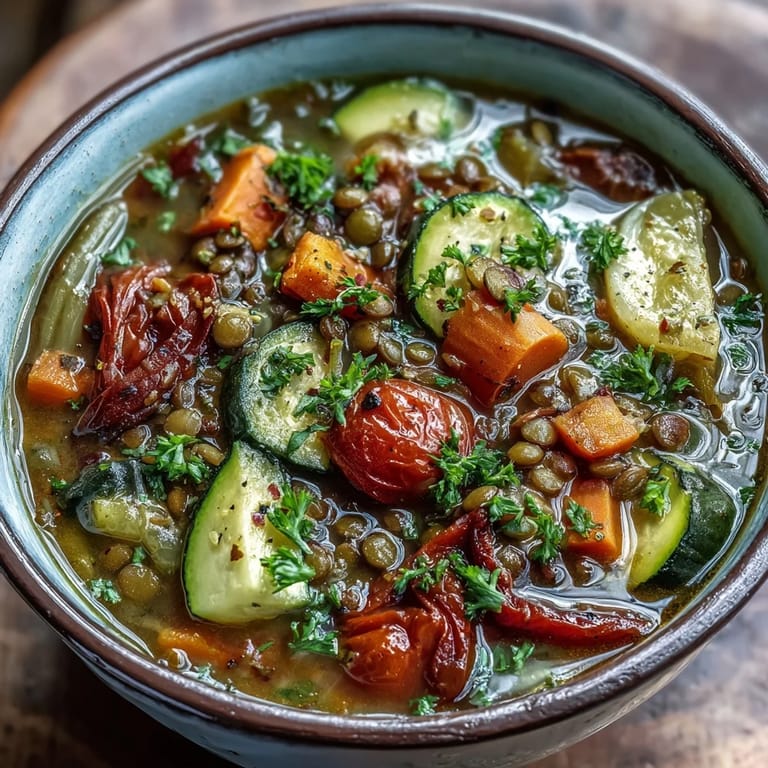 Save
Save This soup became my go-to when I needed to feel like I was taking care of someone, including myself. It's honest food that doesn't pretend to be anything more than what it is—nourishing, warm, and genuinely good.
Recipe FAQs
- → Can I use red lentils instead of green or brown?
Red lentils cook faster and break down more, creating a creamier texture. If using red lentils, reduce cooking time to 15-20 minutes and expect a thicker consistency.
- → Can I make this soup ahead of time?
Yes, this soup stores beautifully in the refrigerator for up to 5 days and freezes well for up to 3 months. The flavors often deepen after a day. You may need to add extra broth when reheating as lentils absorb liquid.
- → Do I have to roast the vegetables first?
Roasting is optional but highly recommended as it caramelizes the vegetables and adds depth of flavor. If short on time, you can add them directly to the pot, but increase simmering time by 10 minutes.
- → What can I use if I don't have vegetable broth?
You can use water with additional seasonings, chicken broth for non-vegetarian versions, or dissolve vegetable bouillon cubes in water according to package directions.
- → How can I make this soup more filling?
Serve with crusty bread, add cooked grains like quinoa or farro, increase the lentil quantity, or stir in chopped kale or spinach during the last 5 minutes of cooking.
- → Why are my lentils still hard after cooking?
Old lentils take longer to soften. Also, adding acidic ingredients like lemon juice too early can prevent softening. Always add acid at the end, and ensure lentils simmer gently for the full 25 minutes.