 Save
Save There's something about the smell of cauliflower softening in a pot that makes a kitchen feel like home, even if you're just learning to cook. My neighbor once mentioned she'd been making the same chowder for twenty years, and I asked what kept her coming back to it—she said it never failed her, especially on the kind of days when the world felt too loud. I decided to try it one gray November afternoon, and by the time the first spoonful touched my lips, I understood what she meant.
I made this for my sister once when she was going through something difficult, and she sat at my kitchen counter and didn't say much, just ate slowly and asked for seconds. That's when I realized good food isn't about being fancy—it's about showing up for people with something warm in your hands. She still texts me asking for the recipe, though I suspect she already has it written down somewhere.
Ingredients
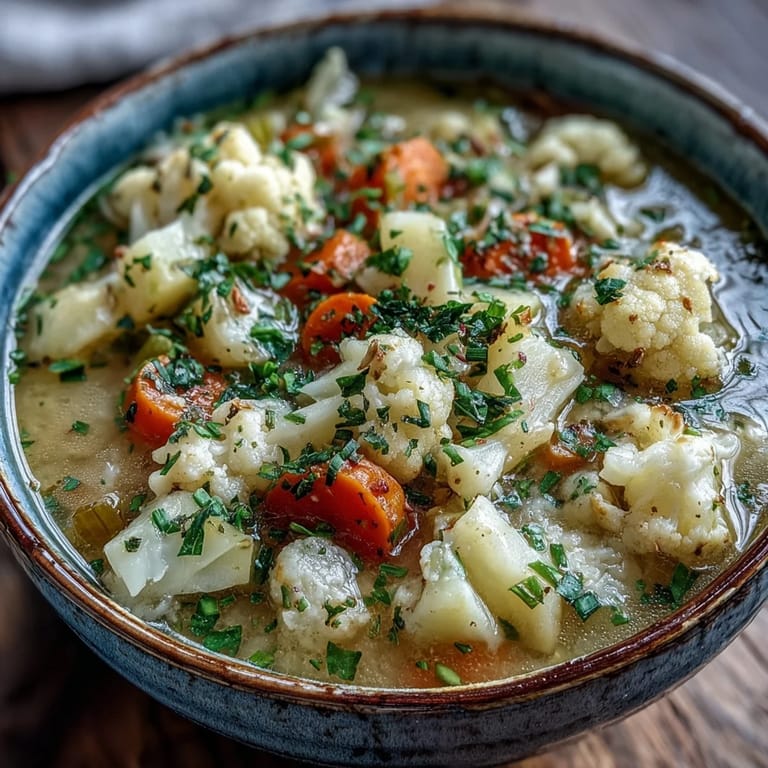
- Cauliflower (1 medium head, cut into small florets): The star that transforms into something creamy when you blend part of it back into the broth.
- Potatoes (2 medium, peeled and diced): They thicken everything naturally and add a gentle sweetness that balances the earthiness.
- Carrot (1 large, diced): This is where the color comes from, and the small sweetness that makes people ask what herb you added.
- Celery (1 stalk, diced): The quiet backbone that brings depth without announcing itself.
- Onion (1 small, finely chopped): Cut it small so it dissolves into the base rather than staying chunky.
- Garlic (2 cloves, minced): Add this after the softer vegetables or it'll burn and taste bitter instead of golden.
- Vegetable broth (3 cups): Use a good one you'd actually drink, because that's the liquid foundation everything else floats on.
- Whole milk or plant-based milk (1 cup): The ingredient that makes it creamy without cream, added at the end so it doesn't split from the heat.
- Olive oil or unsalted butter (2 tbsp): Butter makes it richer, oil keeps it lighter—choose based on your mood.
- All-purpose or gluten-free flour (2 tbsp): This thickens the soup and creates the base for that silky mouthfeel.
- Dried thyme (1/2 tsp): Dried herbs work beautifully here because the long simmer lets them fully release their flavor.
- Smoked paprika (1/2 tsp): The secret weapon that makes people think you cooked it longer than you actually did.
- Salt and pepper (1/2 tsp salt, 1/4 tsp pepper): Taste as you go because broths vary in saltiness, and you want to adjust rather than regret.
- Fresh chives or parsley (2 tbsp, chopped, optional): The brightness at the end that says you cared enough to finish it properly.
Tired of Takeout? 🥡
Get 10 meals you can make faster than delivery arrives. Seriously.
One email. No spam. Unsubscribe anytime.
Instructions
- Start your flavor base:
- Heat the oil or butter in a large pot over medium heat until it's shimmering but not smoking. Add the onion, carrot, and celery, and let them soften for about four to five minutes—you're listening for that gentle sizzle and watching for the onion to turn translucent.
- Wake up the garlic:
- Stir in the minced garlic and cook for just one minute until the kitchen smells suddenly alive and fragrant. This short window is exactly right—any longer and it turns harsh.
- Make your roux:
- Sprinkle the flour over everything and stir constantly for two minutes, letting the flour cook into the fat and vegetables. You're creating the thickening agent that makes this creamy, so don't skip this step or rush it.
- Build the broth carefully:
- Whisk in the vegetable broth gradually, pouring a little at a time and stirring so no flour lumps form in the liquid. Once it's all incorporated and smooth, add the diced potatoes and cauliflower florets.
- Season and simmer:
- Sprinkle in the thyme, smoked paprika, pepper, and salt, then bring everything to a boil before turning the heat down to a gentle simmer. Let it bubble quietly for about twenty minutes until the vegetables are so tender they almost fall apart when you stir.
- Add the dairy moment:
- Pour in the milk and stir gently, then simmer for another five minutes without letting it boil hard. The soup at this point is already good, but the milk makes it something you want to come back to.
- Decide your creaminess:
- For a chunky chowder, leave it as is. For something silkier, use an immersion blender to partially break things up—about half the texture should still be pieces—or blend two cups separately and stir it back in.
- Taste and adjust:
- This is the moment that matters. Taste a spoonful and decide if it needs more salt, more pepper, or maybe a pinch of nutmeg for depth.
- Serve with intention:
- Ladle it into bowls while it's still steaming, garnish with fresh herbs or cheese if that's your style, and serve alongside something crusty to break up the creaminess.
 Save
Save 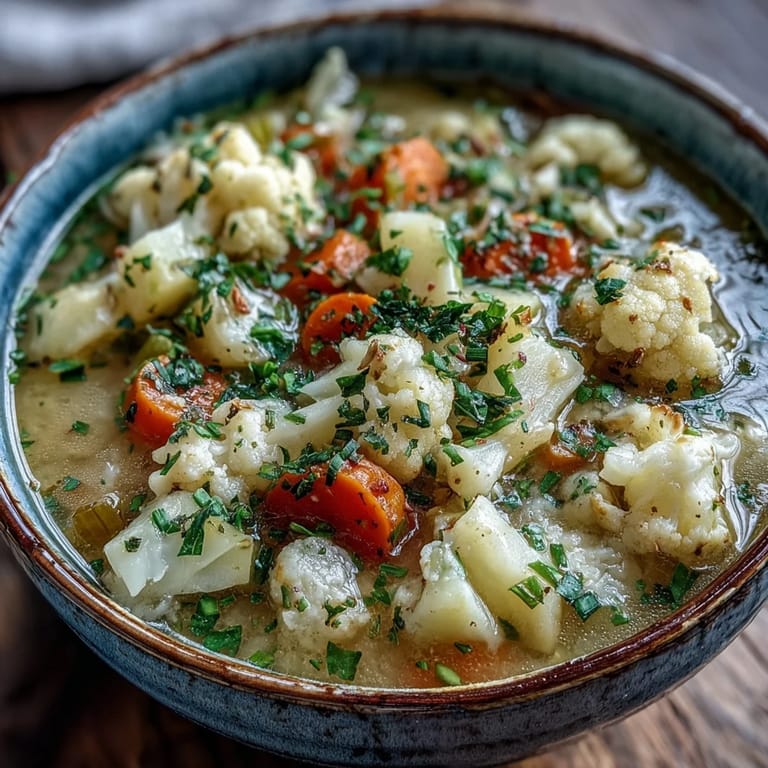 Save
Save I've learned that the best recipes are the ones that ask so little of you but give so much back. This soup has become the thing I make when I don't have time to think, yet somehow it tastes like I've been simmering it all day.
The Magic of Partial Blending
The first time I made this, I blended the entire pot and ended up with something more like a sauce than a soup, which taught me something important. Now I leave most of the texture intact and just use the immersion blender to break down enough of the cauliflower and potato to thicken the broth naturally—this way you get that creamy feeling without losing the soul of a chowder. It's the difference between something that tastes refined and something that tastes like it was made with attention to what makes a chowder actually special.
Stretching It Further
This recipe makes four generous servings, but I've discovered you can easily transform it into something different on night two. Adding cooked grains like rice or barley turns it into something heartier, or you can thin it with extra broth and call it a stew. One winter I added white beans and suddenly had a protein boost that made leftovers feel like a completely new meal.
Seasonings and Your Taste
The beauty of this chowder is how much it invites customization without falling apart. Some people add a whisper of white wine with the broth, others swear by a tiny pinch of cayenne for warmth, and I once added fresh thyme instead of dried and everything tasted lighter and brighter. The smoked paprika is doing most of the flavor work here, so if you're out of it, don't make this soup with regular paprika—it needs that smoky note to feel complete.
- A splash of good sherry or white wine added with the broth brings an unexpected elegance.
- If you're vegan, use plant-based butter and milk and it loses nothing in translation.
- Crusty bread isn't optional—it's the vehicle that lets you get every last drop of broth from the bowl.
 Save
Save  Save
Save Make this soup and you'll understand why my neighbor has been returning to it for two decades. It's the kind of recipe that asks for simplicity but delivers something that feels like it was worth far more effort than it actually took.
Recipe FAQs
- → Can I make this chowder ahead of time?
Yes, this chowder stores well in the refrigerator for up to 4 days. Reheat gently on the stovetop, adding a splash of broth or milk if it thickens too much during storage.
- → How can I make this soup creamier?
Use an immersion blender to partially puree the soup directly in the pot, or transfer half the chowder to a blender, puree until smooth, and stir it back in. You can also add extra milk or a splash of cream.
- → What can I substitute for cauliflower?
Broccoli works wonderfully as a substitute and provides a similar texture. You can also use a combination of both cauliflower and broccoli for variety.
- → Can I freeze cauliflower chowder?
While possible, dairy-based soups can separate when frozen. For best results, freeze the base without milk, then add fresh milk when reheating. It will keep frozen for up to 2 months.
- → How do I make this chowder vegan?
Simply swap the butter for olive oil and use unsweetened plant-based milk such as almond, oat, or cashew milk. Ensure your vegetable broth is also vegan-certified.
- → What bread pairs best with this chowder?
Crusty sourdough, French baguette, or whole grain bread all complement this chowder beautifully. Toasted garlic bread also makes an excellent accompaniment for dipping.