 Save
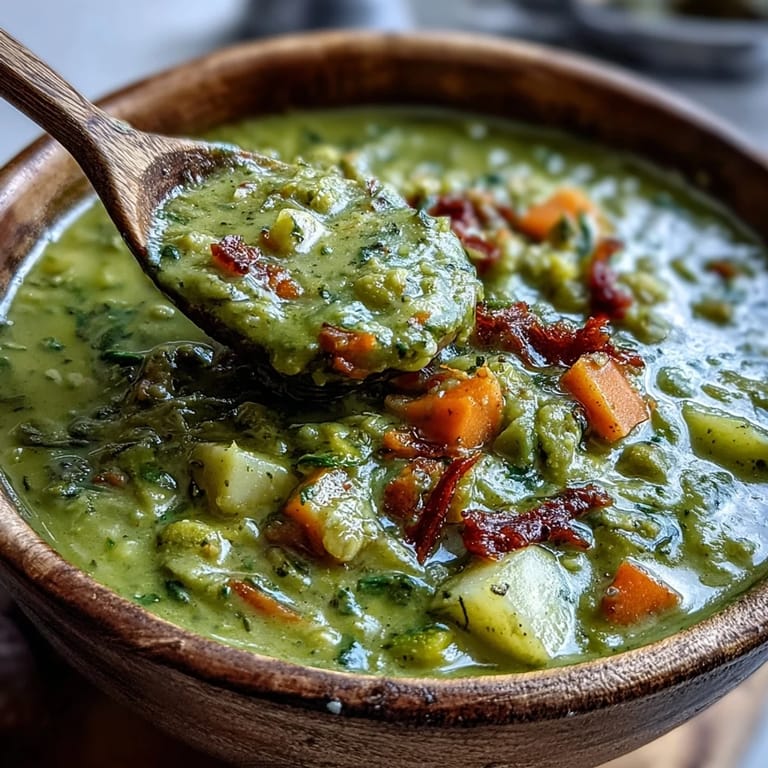
Save There's something about the smell of split peas simmering on a cold afternoon that stops you mid-thought. My neighbor knocked on my door one January, shivering, and asked if I had any soup going because the aroma had drifted across our yards. I didn't, but I promised to make one that week. That promise turned into this recipe, and now whenever winter hits hard, I find myself chopping vegetables at this exact same stove, knowing exactly what's coming next.
I made this soup for my daughter's college roommates during Thanksgiving break, and one of them asked for the recipe before dessert was even served. That's when I realized this wasn't just comfort food—it was the kind of dish that makes people feel cared for. She's made it dozens of times since, and she texts me photos of her own batches.
Ingredients
- Dried split green peas (2 cups, rinsed): These little legumes are the backbone of everything, and rinsing them removes dust and any debris that sneaks in during storage.
- Onion (1 large, diced): The foundation of flavor—don't skip the sautéing step because it transforms the bite into something mellow and sweet.
- Carrots (2, peeled and diced): They add natural sweetness and break down into the broth, creating depth without any added sugar.
- Celery stalks (2, diced): A classic aromatic that rounds out the vegetable trio and brings an earthy note.
- Garlic (2 cloves, minced): Just enough to add complexity without overpowering the delicate pea flavor.
- Potato (1 medium, peeled and diced): This helps thicken the soup naturally and adds heartiness that makes it a meal on its own.
- Bay leaf (1): Drop it in whole and fish it out later—it's your secret weapon for restaurant-quality depth.
- Dried thyme (1 teaspoon): The herb that remembers winter and brings warmth to every spoonful.
- Vegetable broth (6 cups): Use the best quality you can find because it's the liquid foundation—chicken broth works too if you want a richer flavor.
- Olive oil (1 tablespoon): Just enough to coat the pot and coax out the sweetness from your aromatics.
- Smoked ham or ham bone (1 cup diced or 1 bone, optional): This is what transforms the soup from vegetarian comfort to that deep, smoky richness that tastes like home.
- Black pepper and salt: Always taste before serving because broth varies in saltiness, and you want to season to your preference.
Tired of Takeout? 🥡
Get 10 meals you can make faster than delivery arrives. Seriously.
One email. No spam. Unsubscribe anytime.
Instructions
- Start your aromatics:
- Heat the olive oil in your pot over medium heat and add the diced onion, carrots, and celery. Let them soften for about five minutes, stirring occasionally, until they lose their raw edge and the kitchen starts smelling intentional.
- Build the flavor:
- Stir in the minced garlic and let it cook for just one minute until it releases that pungent, wonderful smell—this is the moment you know the soup is coming together.
- Combine everything:
- Add the rinsed split peas, diced potato, bay leaf, thyme, and broth to the pot. If you're using ham or a ham bone, add it now so it infuses everything as it cooks.
- Simmer and surrender:
- Bring the soup to a boil, then lower the heat and cover the pot. Let it bubble gently for about an hour, stirring every fifteen minutes or so to make sure nothing sticks to the bottom—this is when you can step away and trust the process.
- Remove solids:
- Once the peas are soft and falling apart, fish out the bay leaf and the ham bone if you used one. If you added diced ham, stir it back through the soup.
- Adjust the texture:
- For a creamier soup, use an immersion blender to partially puree it, blending just enough so some peas break down while leaving texture. Some people prefer half blended—you decide what feels right.
- Season and serve:
- Taste the soup and adjust salt and pepper until it feels right on your tongue. Ladle it into bowls while it's still steaming.
 Save
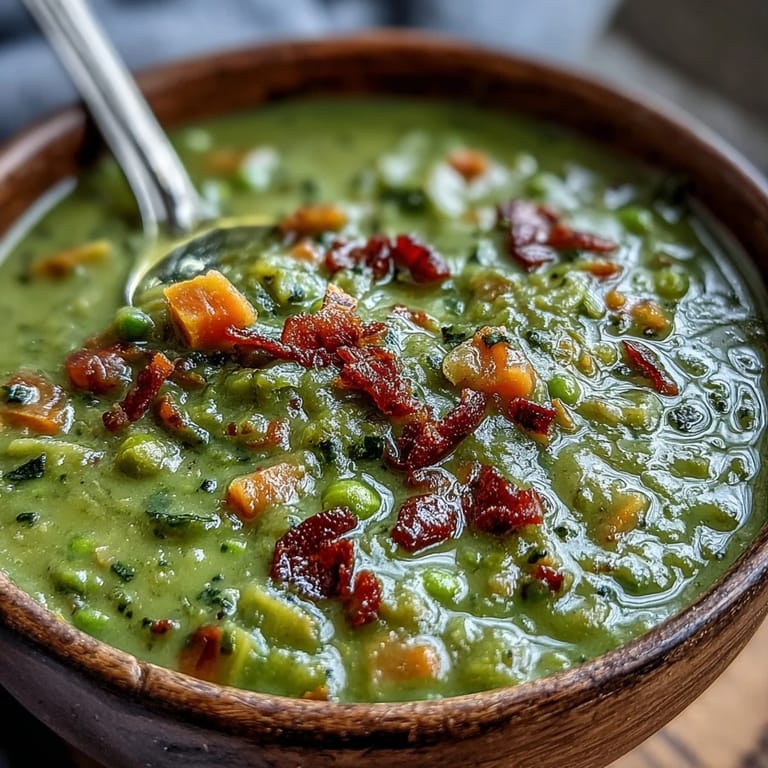
Save I learned something about this soup one snowy Saturday when my partner was sick and I made a pot without thinking about portions. By the end of the day, we'd eaten four bowls between us, and there was still enough for the next morning. That's when I understood this recipe wasn't just about nourishment—it was about comfort you could spoon into a bowl and pass across a table.
The Vegan Path
If you're skipping the ham, don't feel like you're missing out on smokiness. A teaspoon of smoked paprika stirred in at the end gives you that depth in a different way. I've made versions both with and without meat, and honestly, both versions disappear just as fast. The peas and vegetables carry enough weight on their own that you won't feel like anything's missing.
Bread Pairings That Matter
This soup demands bread—not as an afterthought, but as part of the experience. A crusty sourdough with a dark crust and chewy interior will hold up to dipping without falling apart, and somehow tastes better when it's soaked in pea broth. Garlic bread works too if you're in the mood for something more indulgent, though the simplicity of good bread honestly lets the soup shine.
Storage and Second Life
This soup keeps beautifully in the refrigerator for up to five days, and it freezes even better if you want to stash portions for later. I often make a double batch because reheating it feels like a small gift to your future self. When you're warming it up, remember that it will be thicker than it was fresh, so don't be shy with the broth or water.
- Refrigerate in airtight containers and reheat gently on the stove, stirring often to prevent sticking.
- Freeze in portions so you can thaw exactly what you need without defrosting a giant batch.
- Add a swirl of sour cream or a squeeze of lemon right before serving if you want brightness alongside the earthiness.
 Save
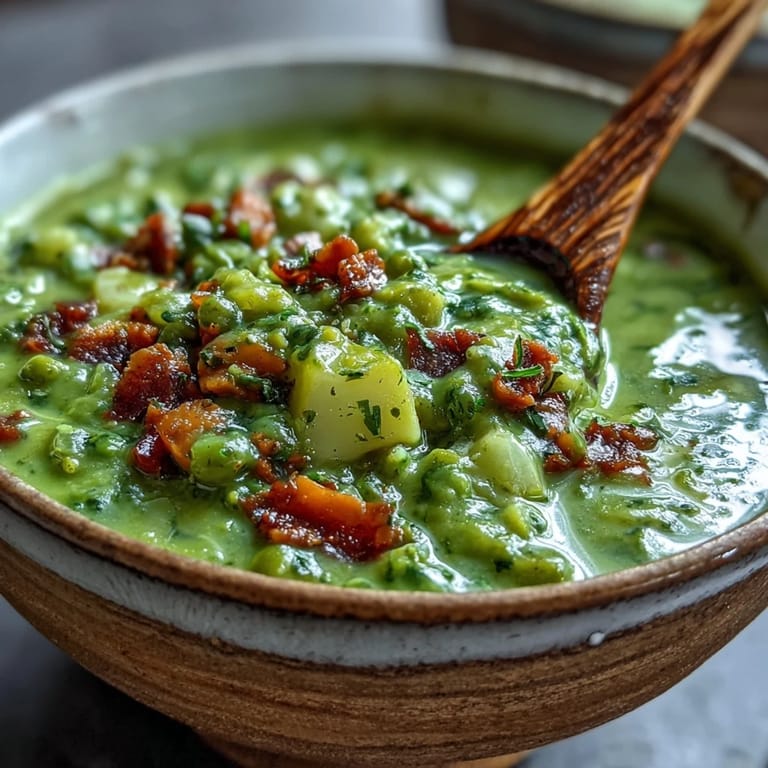
Save This soup has taught me that the simplest recipes often hold the most power. There's nothing trendy or complicated about it, just honest ingredients and time doing what they do best.
Recipe FAQs
- → Should I soak split peas before cooking?
No soaking required. Dried split peas cook relatively quickly and soften beautifully during the hour-long simmer. Just rinse them thoroughly before adding to the pot.
- → How can I make this vegan?
Simply omit the ham or ham bone and use vegetable broth instead of chicken broth. Add smoked paprika to maintain that traditional smoky flavor element.
- → Why is my soup too thick?
Split peas naturally thicken significantly as they cook and continue thickening when standing. Simply add water or broth while reheating to reach your desired consistency.
- → Can I freeze this soup?
Absolutely. This soup freezes exceptionally well for up to 3 months. The texture remains creamy after thawing, though you may need to add a splash of broth when reheating.
- → What gives traditional split pea soup its smoky flavor?
Smoked ham or a ham bone provides authentic depth. For vegetarian versions, smoked paprika or liquid smoke creates that same comforting smoky essence without meat.
- → How do I achieve the creamiest texture?
Use an immersion blender to puree about half the soup, leaving some vegetable chunks intact. This delivers both smooth creaminess and hearty texture in every spoonful.