 Save
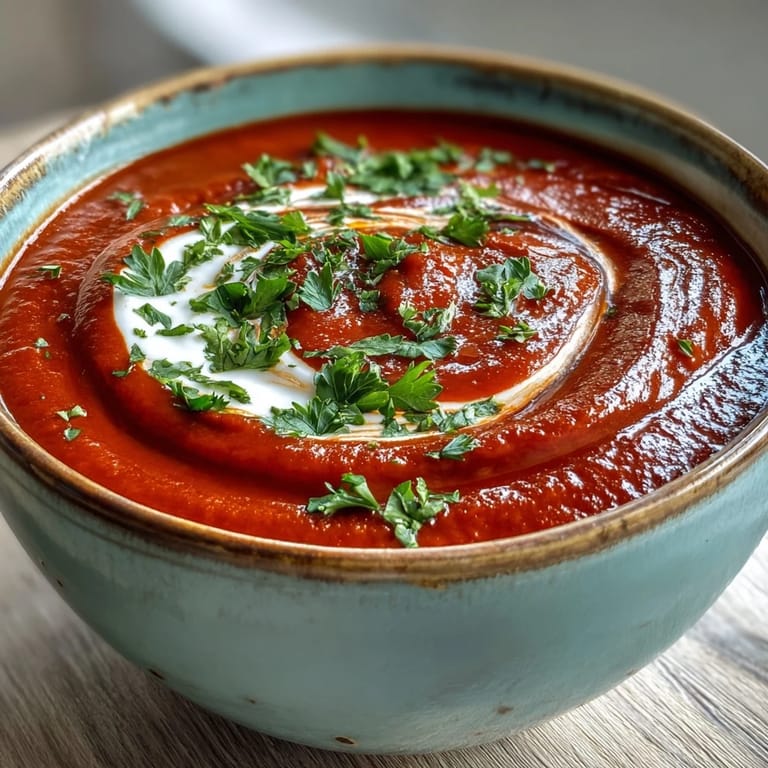
Save Last Tuesday, I burned my fingers pulling a baking sheet from the oven and somehow that's when I understood roasted red pepper soup. The smell hit me before the pain did—sweet, smoky, almost caramelized—and I realized I'd been making soup all wrong for years by starting with raw peppers. That single accident led me to this recipe, which tastes like someone bottled late summer and added just enough heat to keep things interesting.
I made this for my neighbor one rainy afternoon when she mentioned offhandedly that she missed traveling to Morocco. When she tasted it, she got quiet for a moment and then told me about markets in Marrakech and the smell of spices everywhere. That's when I knew soup was doing what good food should do—it was taking someone somewhere.
Ingredients
- Red bell peppers (4 large): Get the ones that feel heavy and have thin skins if you can find them, they'll yield more silky puree and roast faster than thicker-walled varieties.
- Yellow onion (1 large, chopped): The sweetness balances the harissa's heat and disappears into the soup once blended.
- Garlic (4 cloves, unpeeled): Roasting unpeeled garlic mellows it completely, turning it jammy and almost sweet, which is the whole point here.
- Carrot and celery (1 each, chopped): These add body and depth without overwhelming the pepper flavor that's the star of the show.
- Vegetable broth (3 cups): Use good quality broth if possible, or the soup tastes like you took shortcuts.
- Olive oil (2 tbsp total): The fat carries the flavor, so don't skip it or reduce it—it makes a real difference in the final taste.
- Harissa paste (1-2 tsp): Start with 1 teaspoon and taste as you go, it's fiercer than it looks in the jar.
- Smoked paprika and ground cumin (1 tsp and 1/2 tsp): These are your secret architects, building warmth and depth without any heat.
- Salt, pepper, and optional garnishes: Crème fraîche cuts the richness perfectly, but yogurt works just as well and tastes almost as good.
Tired of Takeout? 🥡
Get 10 meals you can make faster than delivery arrives. Seriously.
One email. No spam. Unsubscribe anytime.
Instructions
- Get everything ready to roast:
- Preheat your oven to 425°F and arrange the whole red peppers and unpeeled garlic cloves on a baking sheet. Drizzle with a tablespoon of olive oil and let them catch some heat—this is where the real flavor gets built.
- Roast until charred and soft:
- Roast for 25 to 30 minutes, turning the peppers halfway through so they char evenly on all sides. The garlic should smell deep and caramelized, and the peppers should look blistered and collapsed. This isn't delicate work; you want color and char.
- Let them steam and soften:
- Transfer the roasted peppers to a bowl, cover it tightly with a plate or plastic wrap, and let them sit for 10 minutes. The steam does the work for you, loosening the skins so they practically fall away. Then squeeze the roasted garlic from its papery skins.
- Build your base:
- Heat the remaining tablespoon of oil in a large pot over medium heat, add the chopped onion, carrot, and celery, and let them soften for 5 to 7 minutes. You're not looking for caramelization here, just tender vegetables that will add body to the soup.
- Add the roasted treasures and spices:
- Stir in the roasted peppers, squeezed garlic, smoked paprika, cumin, and harissa paste. Cook everything together for about a minute so the spices wake up and get fragrant.
- Simmer and meld:
- Pour in the vegetable broth, bring everything to a boil, then lower the heat and simmer gently for 10 minutes. The flavors are already deep, but this time lets them get to know each other.
- Blend until silky:
- Use an immersion blender to puree the soup directly in the pot, or carefully transfer it in batches to a blender. You want it absolutely smooth, no specks of vegetable, just silk.
- Season and taste:
- Taste it before you do anything else, then add salt and pepper until it tastes like how you want soup to taste. This is your moment to adjust the harissa too if it needs more or less heat.
 Save
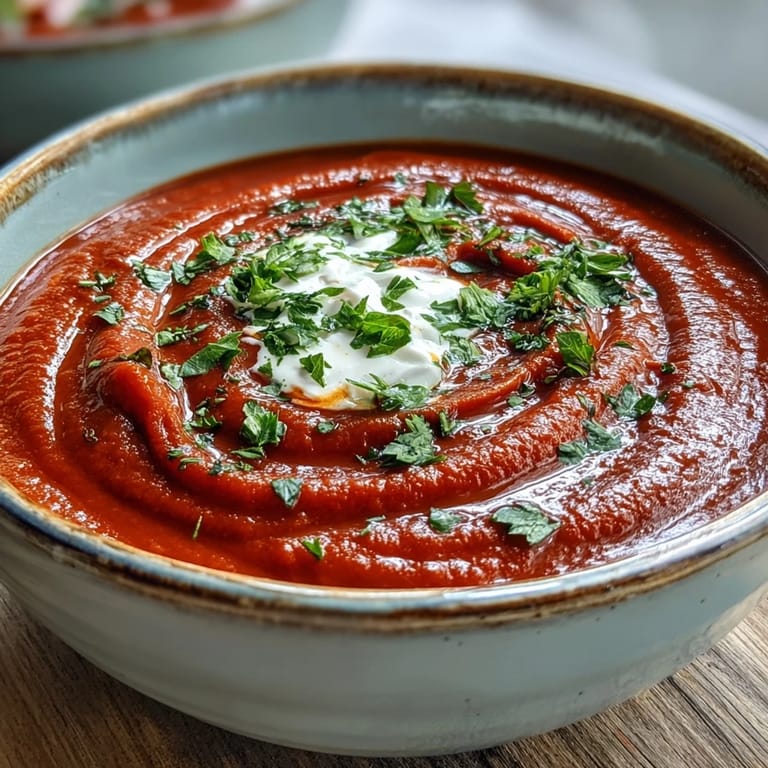
Save My daughter brought her friend home from school once and I had this soup simmering, and the two of them sat at the kitchen table for an hour just talking, asking for more bread to go with it. Food that makes people linger is food that matters.
The Roasting Secret
Roasting is the difference between ordinary pepper soup and something that tastes like it came from a proper restaurant. When peppers roast, their natural sugars concentrate and caramelize, and the skins blister in a way that releases flavor you simply cannot get by cooking them any other way. The garlic does something similar—it softens into a sweet, almost buttery paste that adds richness without tasting like raw garlic ever could. If you rush this step or skip it, you'll have a decent soup, but you'll miss the entire point of why this recipe exists.
How to Make It Yours
This soup is forgiving enough to bend to what you like. Some days I add a pinch of smoked chili flakes if I want more heat without changing the flavor profile. Other times I stir in a splash of heavy cream at the very end for richness, or a squeeze of lemon juice to brighten it up. The harissa is adjustable, the spices are suggestions, and even the ratio of vegetables can shift slightly depending on what you have sitting around your kitchen.
Storing and Reheating
This soup keeps beautifully in the refrigerator for up to three days, and honestly tastes even better the next day once all the flavors have gotten comfortable with each other. Reheat it gently over medium heat on the stovetop, stirring occasionally, and add a splash of broth or water if it's thickened more than you like. You can also freeze it in portions for up to three months, though the texture stays silky and perfect either way.
- Let soup cool completely before storing so it doesn't warm up your whole fridge.
- Swirl in crème fraîche or yogurt just before serving, or it breaks down and tastes thin.
- Fresh herbs scattered on top make all the difference in how the soup tastes when you're eating it.
 Save
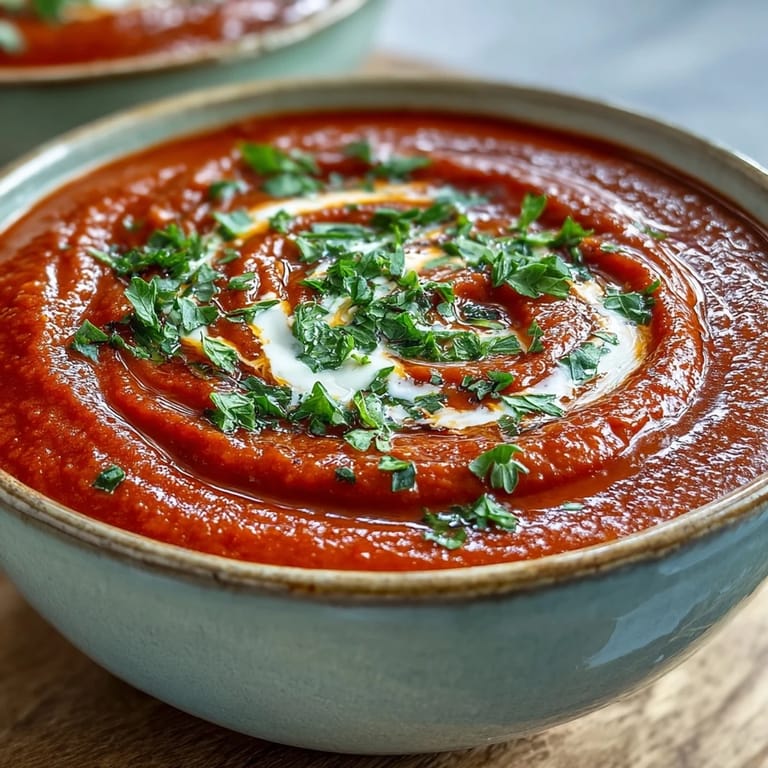
Save Make this soup when you want something that feels like comfort but tastes sophisticated, when you need to feed people without stress, or when the kitchen needs to smell like something wonderful for a while. It's that kind of recipe.
Recipe FAQs
- → Can I use jarred roasted peppers instead of fresh?
Absolutely. Jarred roasted peppers work well and reduce prep time. Look for peppers packed in water rather than oil, then drain thoroughly before blending. You may want to add an extra pinch of smoked paprika to compensate for the loss of charred flavor.
- → How spicy is this soup with harissa?
The harissa adds gentle warmth rather than intense heat. Using 1 teaspoon creates mild spiciness that most palates enjoy. If you're sensitive to spice, start with ½ teaspoon. For those who love bold flavors, 2 teaspoons delivers noticeable warmth without overwhelming the roasted pepper sweetness.
- → Can I freeze this soup?
This soup freezes beautifully for up to 3 months. Cool completely before transferring to airtight containers, leaving space for expansion. Thaw overnight in the refrigerator, then reheat gently on the stovetop. You may need to add a splash of broth when reheating if it seems thick.
- → What can I substitute for harissa paste?
If unavailable, combine equal parts tomato paste and smoked paprika with a pinch of cayenne. Alternatively, use a spoonful of Calabrian chili paste or sriracha for similar heat. Each substitute shifts the flavor profile slightly but maintains the soup's vibrant character.
- → How do I achieve the silkiest texture?
Blend thoroughly, taking time to fully break down any vegetable pieces. An immersion blender works well, but a high-speed blender creates the smoothest consistency. For ultimate refinement, pass the blended soup through a fine-mesh sieve to remove any remaining fibers.