 Save
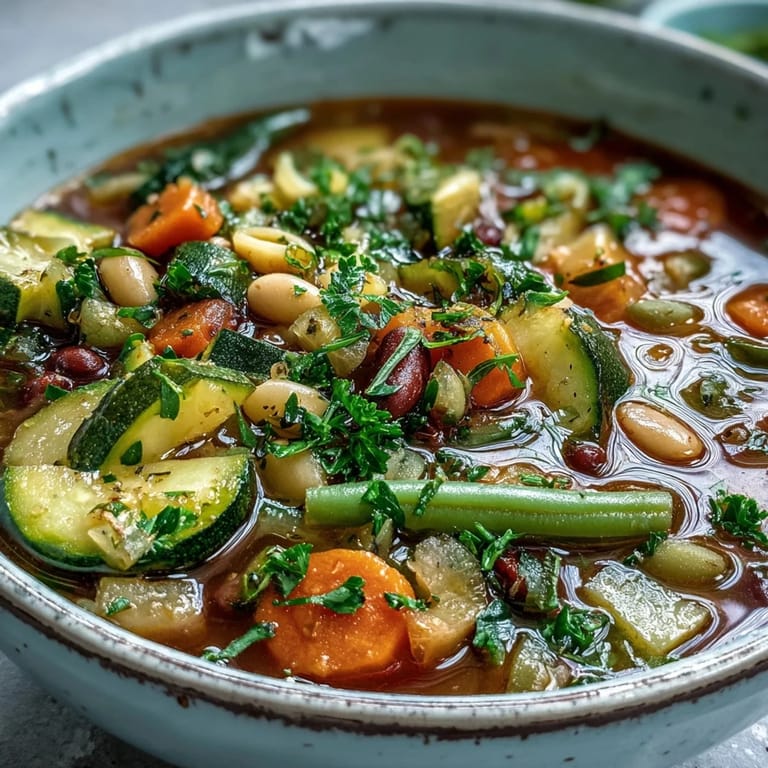
Save There's something about the smell of sautéed onions and celery that instantly transported me back to my neighbor's kitchen in Brooklyn, where she'd make this soup every October when the weather turned crisp. She'd insist it wasn't fancy, just honest food, but somehow it tasted like comfort wrapped in a bowl. Years later, I finally asked for her method, and she laughed saying she'd been making it the same way her mother did in Genoa. That conversation changed how I cook—not by following rules, but by understanding that minestrone is less a recipe and more a kitchen ritual.
I made this for my sister the day she moved into her first apartment, and she sat at her unfurnished kitchen table eating directly from the pot because she hadn't unpacked her bowls yet. She called me three days later asking me to remind her of the ingredients because she'd already made it twice. That's when I realized minestrone isn't just food—it's a quiet way of saying you care about someone.
Ingredients
- Olive oil: Use a good quality one you actually enjoy tasting, because it's the foundation flavor here.
- Yellow onion, carrots, and celery: This trio is the holy trinity of Italian cooking—soften them together and you've built an invisible flavor base that makes everything else shine.
- Garlic: Mince it fresh and add it after the onions so it doesn't burn and turn bitter.
- Zucchini and potato: The potato adds body and starch that naturally thickens the broth as it breaks down slightly.
- Green beans: They stay slightly firm, giving the soup textural contrast that keeps it interesting.
- Diced tomatoes: Canned is perfectly fine here—they're picked at peak ripeness and processed immediately.
- Cannellini beans: Rinse them well to remove the excess starch, otherwise your soup gets cloudy and heavy.
- Small pasta: Ditalini or elbow macaroni work best because they don't get lost in the broth.
- Vegetable broth: Taste yours before using—some brands are quite salty, so adjust your final seasoning accordingly.
- Dried Italian herbs: A good mixture matters more than using fresh here, because simmering breaks down fresh herbs quickly.
- Bay leaf: This quiet ingredient does heavy lifting—remove it before serving or someone will bite into it and wonder what you're doing.
- Spinach or kale: Add it at the very end so it keeps its color and doesn't turn into soup sludge.
- Fresh parsley: Chop this right before serving—it loses its bright flavor if it sits around chopped for too long.
Tired of Takeout? 🥡
Get 10 meals you can make faster than delivery arrives. Seriously.
One email. No spam. Unsubscribe anytime.
Instructions
- Build your flavor base:
- Heat the olive oil in a large pot over medium heat, then add the onion, carrots, and celery all together. You'll hear them hit the hot oil with a gentle sizzle, and after about five minutes they'll soften and turn translucent—that's when you know the foundation is ready.
- Layer in the harder vegetables:
- Add the garlic, zucchini, potato, and green beans to the pot and let them cook for three minutes, stirring occasionally so nothing sticks to the bottom. This step slightly caramelizes the edges and deepens the flavors before the broth goes in.
- Build the broth:
- Pour in the diced tomatoes, cannellini beans, vegetable broth, dried herbs, and bay leaf, then turn the heat up and bring everything to a rolling boil. You'll notice the soup starting to smell distinctly Italian at this point—that's the herbs releasing their essence.
- Let it simmer:
- Cover the pot, reduce the heat to medium-low, and let it bubble gently for twenty minutes while the vegetables become completely tender. This is when you can step away and do something else, because the soup is really becoming itself without your interference.
- Add the pasta:
- Stir in the small pasta and cook uncovered for eight to ten minutes, stirring occasionally so the pasta doesn't clump together. Keep tasting it around the eight-minute mark because pasta continues cooking even after you turn off the heat.
- Finish with greens:
- Remove the bay leaf first, then add the spinach or kale and let it wilt for two minutes in the residual heat. The soup should look vibrant and alive at this point, not muddy.
- Season and serve:
- Taste the soup and adjust with salt and pepper—go slowly because the broth already carries some saltiness. Ladle it into bowls, garnish with fresh parsley, and finish with Parmesan cheese if you're using it.
 Save
Save  Save
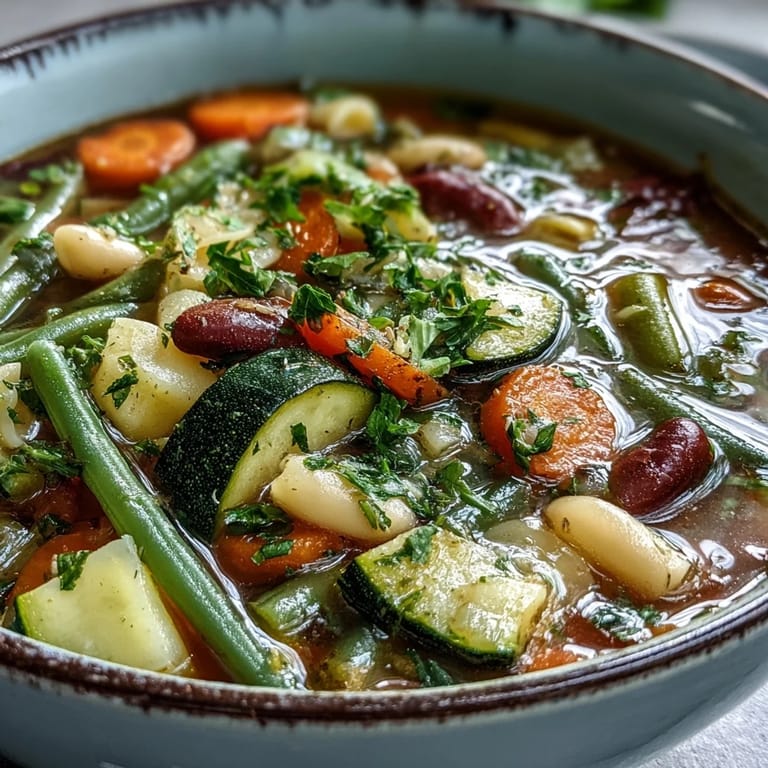
Save My dad always said that minestrone was proof that simple ingredients didn't need to pretend to be anything fancy. Watching him eat it slowly, savoring each spoonful with a piece of crusty bread, taught me that the best meals are the ones where nobody's rushing.
Why This Soup Works
There's a reason minestrone has survived centuries—it's adaptable enough to use whatever vegetables you have, hearty enough to stand alone as a complete meal, and humble enough to welcome Parmesan without asking permission. The pasta adds substance, the beans add protein, and the herbs tie everything together into something that tastes infinitely more complex than its ingredient list suggests. It's the kind of soup that teaches you that cooking doesn't require drama or exotic ingredients.
Variations to Try
Once you understand the structure of minestrone, you can bend it however you want. Swap the green beans for peas in spring, add cabbage in winter, or throw in whatever vegetables are on sale that week. I've made it with white beans instead of cannellini, substituted ditalini with broken spaghetti, and even added a Parmesan rind during simmering for extra richness—every version tasted like it was exactly what I needed that day.
Serving and Storage
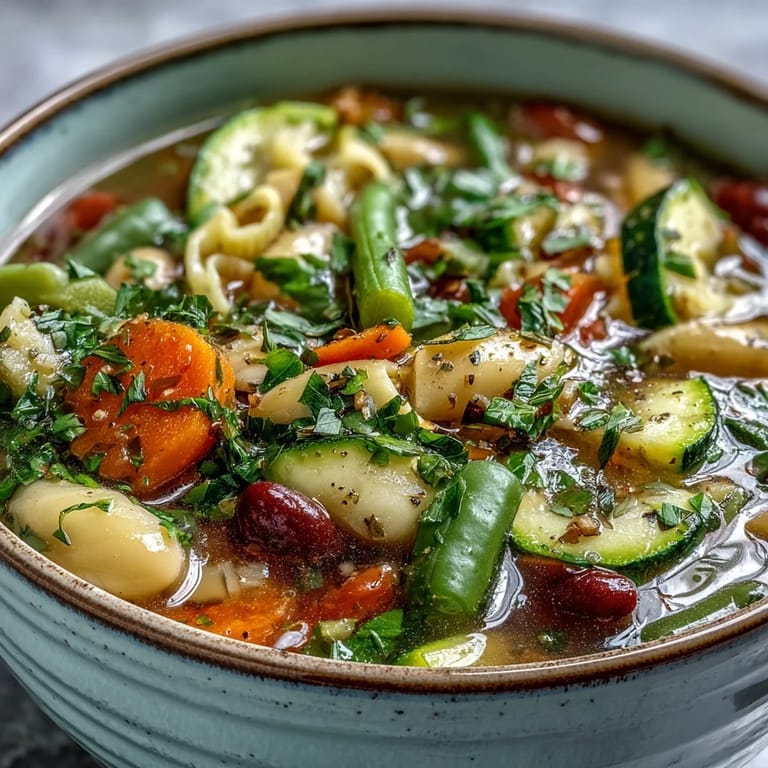
Minestrone tastes better the next day because the flavors have time to mingle and deepen, so don't hesitate to make a big batch. It keeps in the refrigerator for about four days and freezes beautifully for months—though I'd recommend freezing it before adding the pasta, then cooking the pasta fresh when you reheat it. Serve it with crusty bread and a simple green salad, maybe a glass of red wine if the mood strikes, and suddenly you have the kind of dinner that feels both effortless and intentional.
- Store leftovers in an airtight container and reheat gently on the stove rather than the microwave so the flavors don't scatter.
- If the soup thickens too much after sitting, just add a splash of vegetable broth or water when you reheat it.
- Day-old minestrone is perfect for lunch boxes because it travels well and tastes even better cold or at room temperature.
 Save
Save 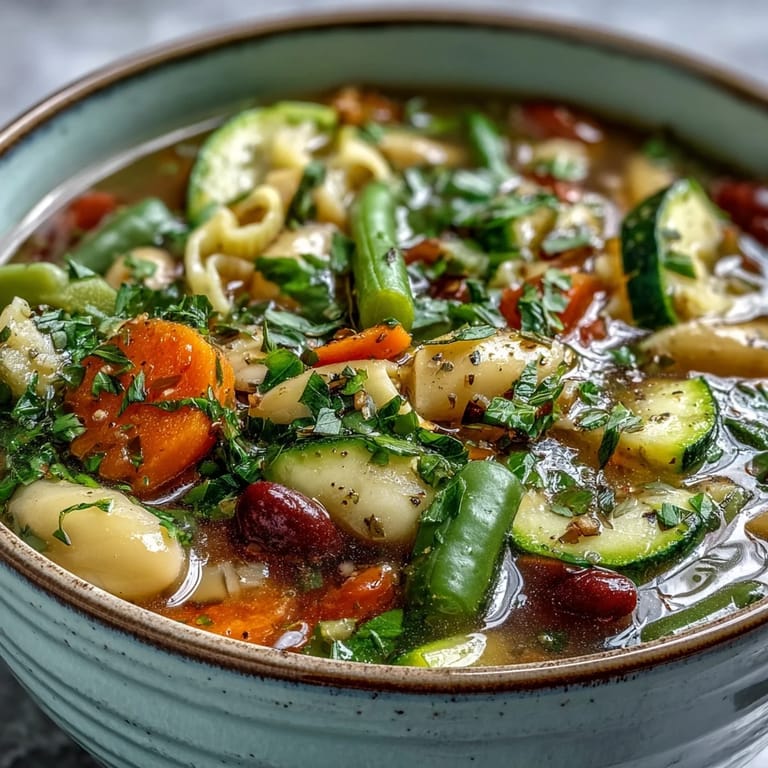 Save
Save Minestrone taught me that the best recipes are the ones that bend to your schedule and your pantry, not the other way around. Make this soup tonight, and I promise you'll understand why people have been making it for generations.
Recipe FAQs
- → Can I use different vegetables in minestrone?
Absolutely! Minestrone is very versatile. Feel free to add seasonal vegetables like cabbage, peas, bell peppers, or whatever you have on hand. The key is maintaining a good balance of textures and flavors.
- → What type of pasta works best?
Small pasta shapes like ditalini, elbow macaroni, or small shells work perfectly. They cook evenly in the broth and are easy to eat with a spoon. For gluten-free diets, substitute with your favorite gluten-free pasta.
- → How can I make this soup more substantial?
To make it heartier, increase the amount of beans or pasta, add a Parmesan rind while simmering for deeper flavor, or serve with thick slices of crusty Italian bread drizzled with olive oil.
- → Can I prepare minestrone ahead of time?
Yes! This soup actually tastes better the next day as flavors meld together. Store in the refrigerator for up to 4 days or freeze for up to 3 months. Note that pasta may absorb liquid, so add extra broth when reheating.
- → How do I make it vegan?
Simply omit the Parmesan cheese or use a vegan alternative. The soup is naturally plant-based otherwise. You can add nutritional yeast for a cheesy flavor without dairy.
- → What should I serve with minestrone?
Crusty Italian bread, focaccia, or garlic bread are traditional accompaniments. A simple green salad with balsamic vinaigrette also pairs beautifully. For wine, try a light Chianti or Pinot Grigio.