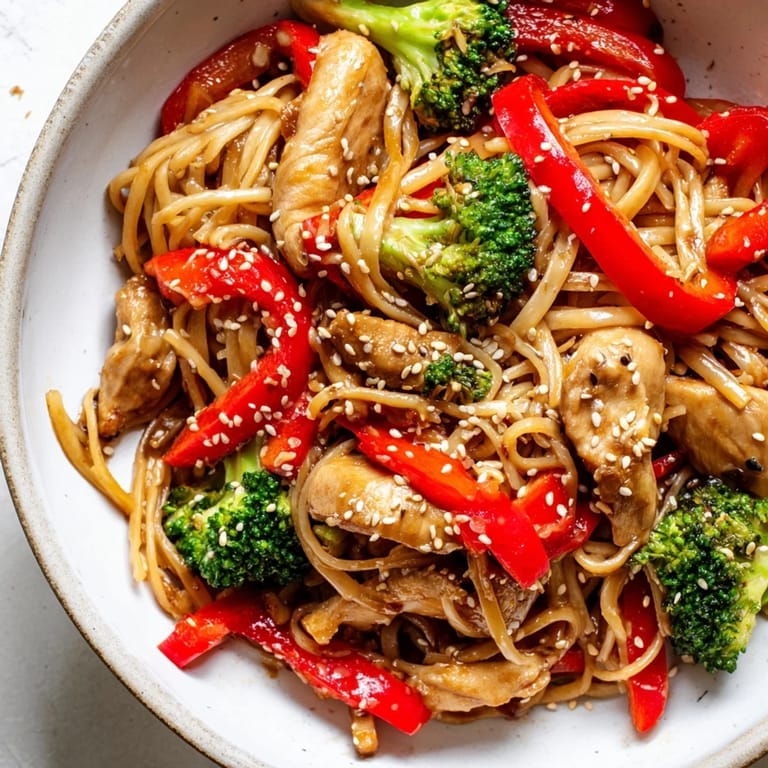
 Save
Save My kitchen was a disaster zone at 9 p.m. on a Tuesday when I realized I had nothing planned for dinner. I stared at the half-empty fridge and spotted those forgotten ramen packs in the pantry. What started as desperation cooking turned into something I now crave deliberately. The sizzle of chicken hitting a screaming-hot wok, the way sriracha swirled into soy sauce—it all came together faster than ordering takeout.
I made this for my roommate during finals week, and she looked up from her textbooks with actual tears of gratitude. The smell alone pulled her out of her study cave. We ate straight from the wok, standing at the counter, laughing about how something this good came from instant ramen. It became our official stress-relief dinner after that night.
Ingredients
- Boneless, skinless chicken breasts: Slicing them thin is the secret to quick cooking and tender bites, and freezing them for 15 minutes before slicing makes the job so much easier.
- Instant ramen noodles: Toss those seasoning packets and use the noodles as your canvas, they soak up the homemade sauce beautifully and have the perfect chewy texture.
- Red bell pepper: It adds a sweet crunch and gorgeous color that makes the whole dish look alive, plus it holds up well to high heat without turning mushy.
- Broccoli florets: Cut them small and uniform so they cook quickly and get those slightly charred edges that taste incredible.
- Carrot: Julienned thin, it cooks fast and adds a subtle sweetness that balances the spicy sauce.
- Green onions: Use both the white and green parts, they add a fresh, sharp bite that cuts through the richness at the end.
- Garlic and ginger: These are your aromatics, the foundation of flavor, and grating the ginger releases more of its spicy warmth than chopping.
- Soy sauce: The salty backbone of the sauce, it ties everything together and deepens the savory notes.
- Sriracha or chili garlic sauce: Start with one tablespoon and taste as you go, you can always add more heat but you cannot take it away.
- Oyster sauce: This adds an umami richness and slight sweetness that makes the sauce cling and glaze beautifully.
- Sesame oil: Just a tablespoon brings that nutty, toasted aroma that screams authentic stir-fry.
- Brown sugar: It balances the heat and salt with a hint of caramel sweetness, rounding out the flavor profile.
- Toasted sesame seeds: They add a delicate crunch and a finishing touch that makes the dish feel complete.
Tired of Takeout? 🥡
Get 10 meals you can make faster than delivery arrives. Seriously.
One email. No spam. Unsubscribe anytime.
Instructions
- Prepare the Noodles:
- Cook the ramen according to the package directions, usually just a few minutes in boiling water. Drain them well and set aside so they do not clump together.
- Mix the Sauce:
- In a small bowl, whisk together the soy sauce, sriracha, oyster sauce, sesame oil, brown sugar, and water until the sugar dissolves. This is your flavor bomb, so taste it and adjust the spice now if you want.
- Cook the Chicken:
- Heat a tablespoon of vegetable oil in a large wok or skillet over medium-high heat until it shimmers. Add the sliced chicken in a single layer and stir-fry for 4 to 5 minutes until just cooked through and lightly browned, then remove and set aside.
- Build the Aromatics:
- In the same pan, toss in the minced garlic and grated ginger, stirring constantly for about 30 seconds. You will know it is ready when the smell hits you and makes your mouth water.
- Stir-Fry the Vegetables:
- Add the bell pepper, broccoli, and carrot to the pan, tossing them in the hot oil for 3 to 4 minutes. They should be tender but still have a satisfying crunch and bright color.
- Bring It All Together:
- Return the chicken to the pan, add the cooked noodles, and pour the sauce over everything. Toss it all vigorously for 2 to 3 minutes, making sure every strand and piece is coated and heated through.
- Finish and Serve:
- Stir in the sliced green onions, taste, and adjust the seasoning or heat if needed. Serve immediately, topped with toasted sesame seeds and fresh herbs if you have them.
 Save
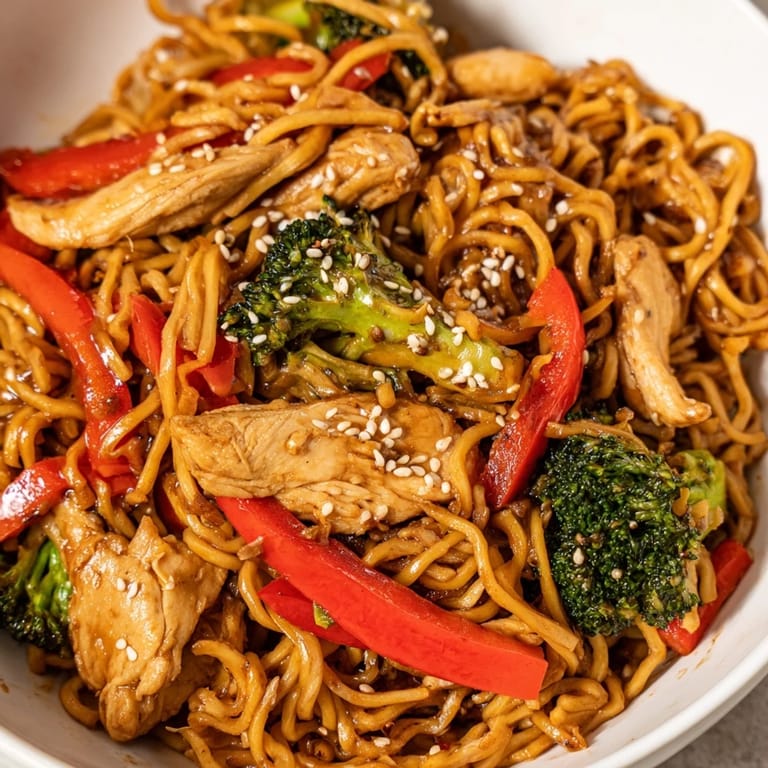
Save One evening, I made this for a friend who swore she did not like spicy food. I dialed back the sriracha just a bit, and she devoured two bowls, asking for the recipe between bites. She texted me a week later with a photo of her own version, proudly declaring she had doubled the heat. That moment reminded me that food has a way of changing minds and bringing people out of their comfort zones.
Making It Your Own
This recipe is incredibly forgiving and practically begs to be customized. Swap the chicken for thinly sliced beef, shrimp, or crispy tofu depending on what you have or what sounds good. I have thrown in snap peas, mushrooms, baby corn, and even leftover roasted vegetables with great results. If you want it less spicy, cut the sriracha in half and add a splash more brown sugar for a sweeter profile. On nights when I want extra richness, I crack an egg into the center of the pan near the end and scramble it right into the noodles.
Serving Suggestions
I love eating this straight from the wok with chopsticks, but it also looks beautiful in wide, shallow bowls with a sprinkle of sesame seeds and cilantro on top. Pair it with a crisp, cold lager or a pot of jasmine tea to balance the heat. If you are feeding a crowd, double the recipe and serve it family-style with lime wedges on the side for squeezing. Leftovers reheat surprisingly well in a hot skillet with a splash of water to loosen the noodles, though they rarely last long enough in my house to make it to the next day.
Storage and Reheating
Store any leftovers in an airtight container in the fridge for up to three days. The noodles will absorb more sauce as they sit, so they might seem less saucy the next day but still taste delicious. Reheat in a skillet over medium heat with a tablespoon or two of water to bring back moisture and loosen everything up. I do not recommend freezing this dish because the noodles and vegetables lose their texture, but if you must, freeze the sauce separately and cook fresh noodles and proteins when you are ready to eat.
- Add a splash of soy sauce or sesame oil when reheating to refresh the flavors.
- If the noodles have clumped, break them apart gently with tongs as they warm.
- Garnish with fresh green onions or cilantro after reheating to bring back that just-made brightness.
 Save
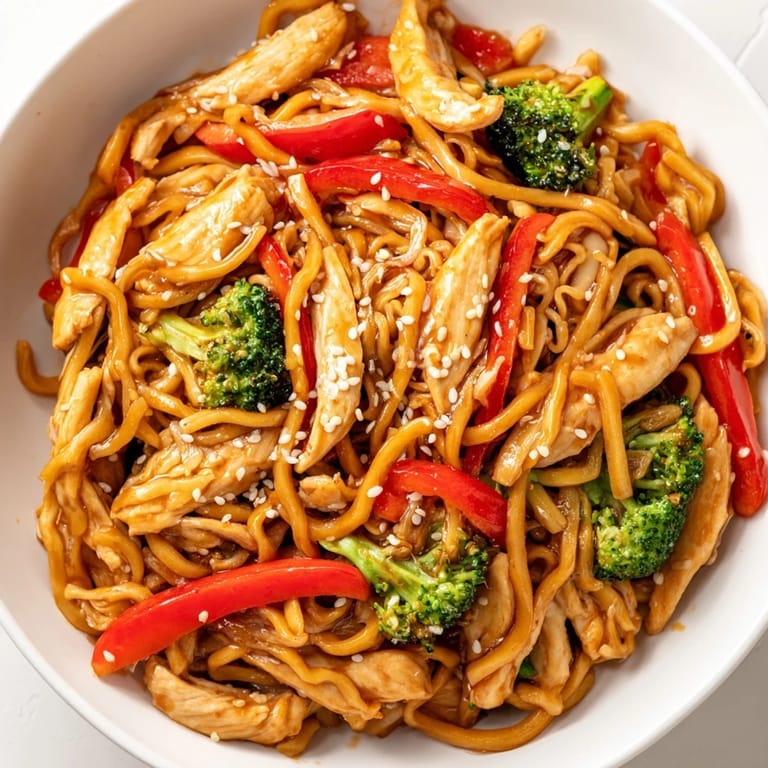
Save This dish has saved me on countless weeknights and impressed more dinner guests than I can count. It proves that you do not need fancy ingredients or hours of time to make something that feels special and tastes unforgettable.
Recipe FAQs
- → Can I use a different protein instead of chicken?
Absolutely. Tofu is an excellent vegetarian alternative that absorbs the spicy sauce beautifully. You can also use shrimp, beef, or pork, adjusting cooking times as needed for each protein.
- → How can I adjust the heat level?
Add more sriracha or red pepper flakes for extra spice, or reduce the sriracha if you prefer milder heat. You can also incorporate fresh Thai chilies or chili oil to customize the intensity.
- → What vegetables work well in this dish?
Beyond bell peppers, broccoli, and carrots, try snap peas, mushrooms, baby corn, bok choy, or zucchini. Choose vegetables that maintain a crisp texture when stir-fried for the best results.
- → Can I prepare this dish ahead of time?
Cook the noodles and vegetables in advance, but stir-fry them fresh just before serving for optimal texture. The sauce can be mixed several hours ahead and stored in the refrigerator.
- → What beverages pair well with this dish?
A crisp, cold lager beer complements the spicy heat beautifully. Jasmine tea, ginger ale, or iced cucumber water also work wonderfully to cool the palate between bites.
- → Is this dish suitable for dietary restrictions?
The dish contains soy, wheat, shellfish, and sesame allergens. For vegetarian versions, substitute tofu. Check sauce labels for gluten content and modify ingredients based on your dietary needs.